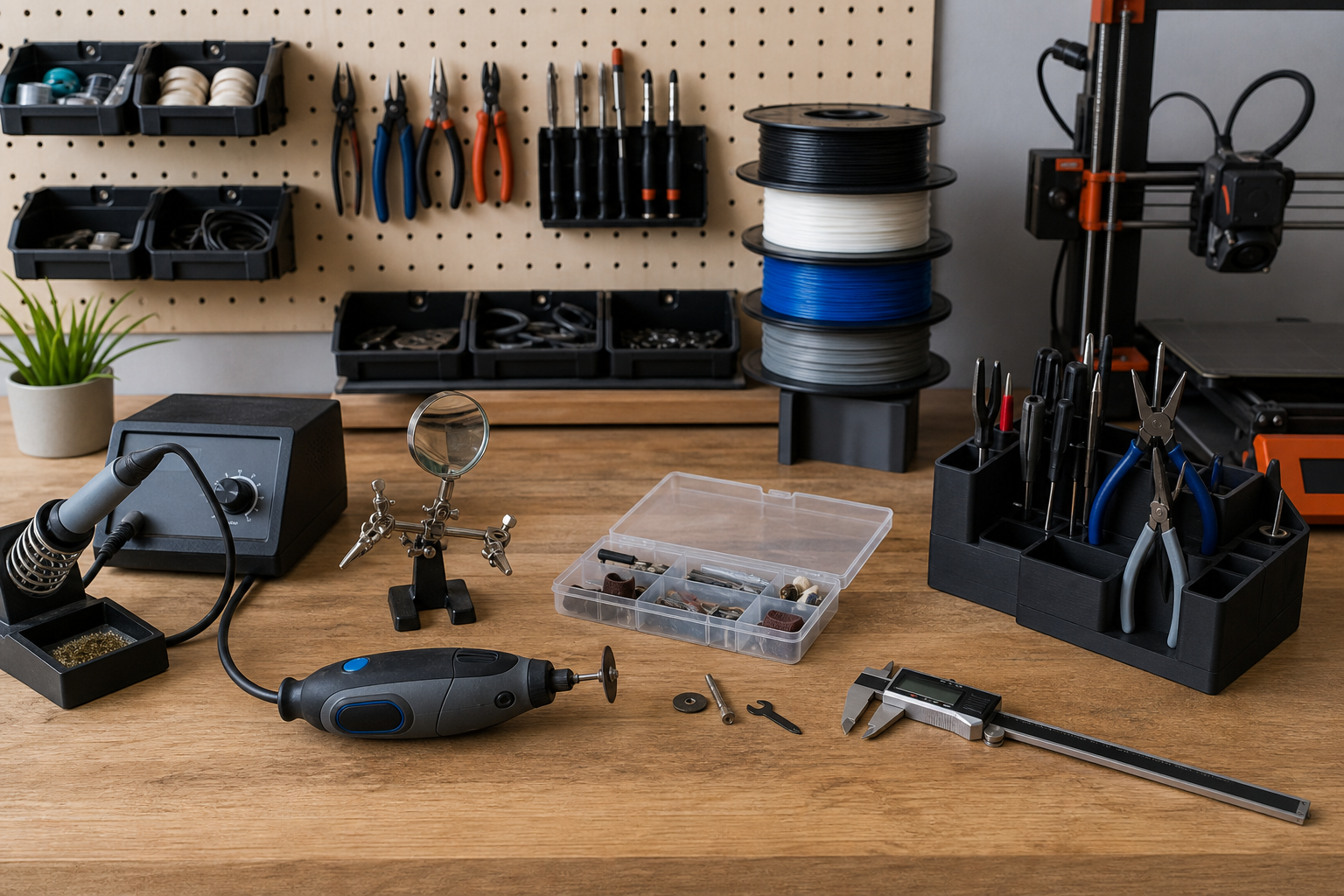
Start With Your Workbench Needs
List the jobs you actually do before comparing tools. Sanding wood, trimming plastic, repairing electronics, and finishing 3D prints all place different demands on power, precision, accessories, and storage.
Use stores and marketplaces as neutral checkpoints for price, delivery, return policy, and availability. Base the decision on specifications, replaceable parts, and support rather than short-term promotions.
- For occasional hobby work, prioritize portability, easy storage, and useful starter accessories.
- For repeated tasks, look at motor durability, temperature stability, and consumable availability.
- For precision work, check caliper resolution, lock quality, display readability, and battery access.
- For small workspaces, stackable organizers and clear labeling matter as much as the tools.
Compare The Core Tools
A rotary tool should be judged by speed range, grip comfort, vibration, and collet compatibility. A soldering station needs stable temperature control, replaceable tips, and a secure stand. Filament choice depends not only on material type but also diameter tolerance and storage condition.
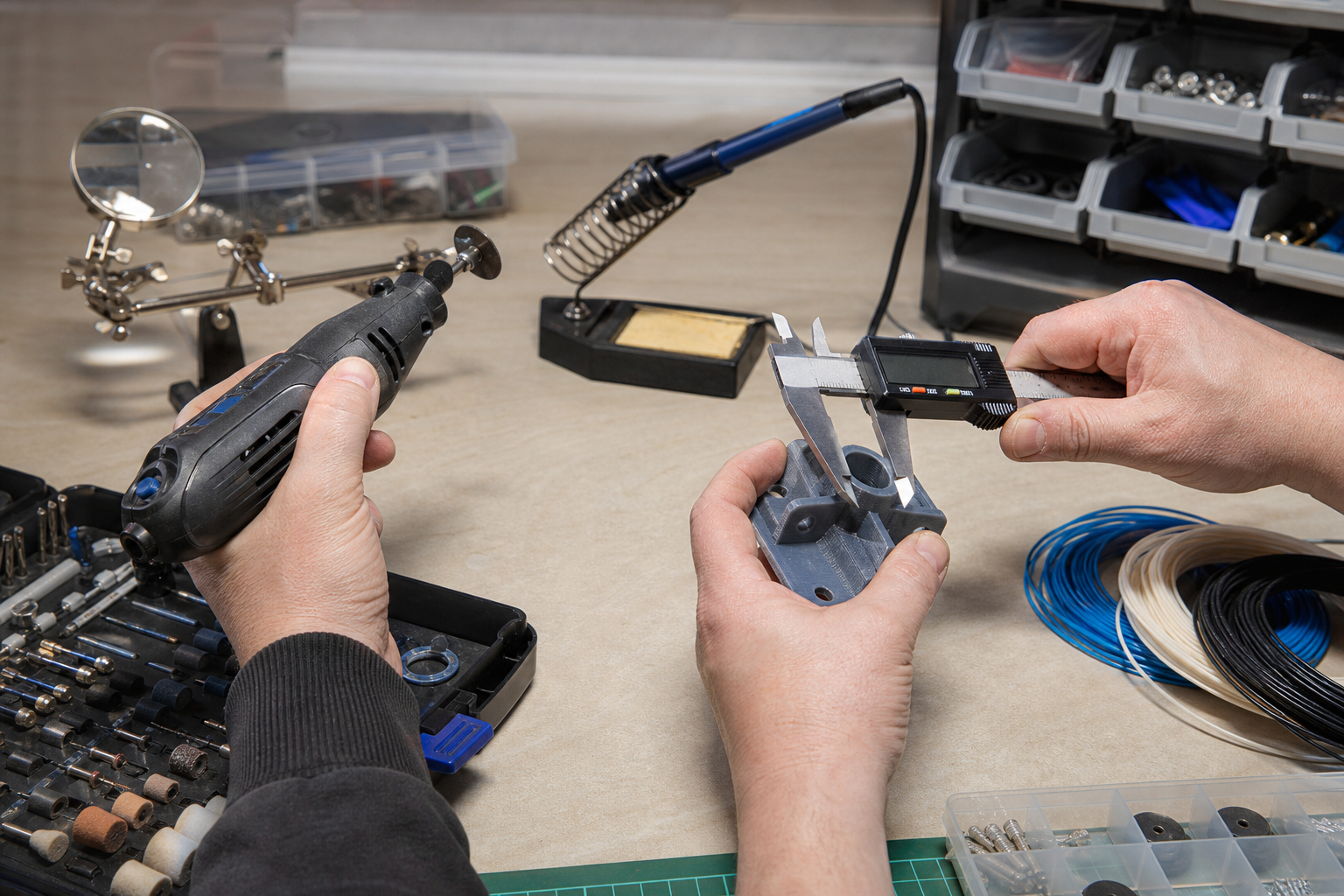
- Rotary tools: compare low-speed control, accessory fit, vibration, and dust handling.
- Soldering stations: check heat-up time, temperature recovery, tip ecosystem, and cable flexibility.
- 3D printer filament: match PLA, PETG, ABS, or other materials to printer temperature limits and project needs.
- Calipers: look for a sturdy body, zero reset, inch and metric switching, and a protective case.
- Tool organizers: compare drawer depth, adjustable dividers, wall-mount options, and dust protection.
Buy For Long-Term Use
The best tool for a maker bench is often the one that is easiest to maintain. Confirm that bits, soldering tips, brushes, batteries, nozzles, and other consumables are available before committing to a platform.
Before buying, read the manufacturer documentation and a range of user reviews, then verify return policies and delivery timing at your preferred stores. A balanced kit matched to your materials and project frequency is more useful than chasing a single top pick.
- Start with versatile core tools and add specialized accessories only when a project requires them.
- Include filament storage, dry boxes, or sealed bags in the real cost of 3D printing supplies.
- For soldering and cutting, consider ventilation, a work mat, and eye protection alongside the main tool.
- Choose organizers with some spare capacity so the system can grow without becoming cluttered.
Frequently asked questions
What should I compare first?
A practical buying guide for choosing rotary tools, soldering stations, 3D printer filament, calipers, and tool organizers without relying on short-term deals or rankings. Start with use frequency, dimensions, warranty, replacement parts, recent reviews, and the return policy before chasing the lowest price.
Should I check Amazon, Coupang, or AliExpress first?
Use Amazon and Coupang for fast delivery categories, then compare AliExpress for low-cost accessories, parts, and bundles.
Where should I confirm price and availability?
Prices, coupons, shipping times, and stock change often, so confirm the final details on the merchant page before buying.