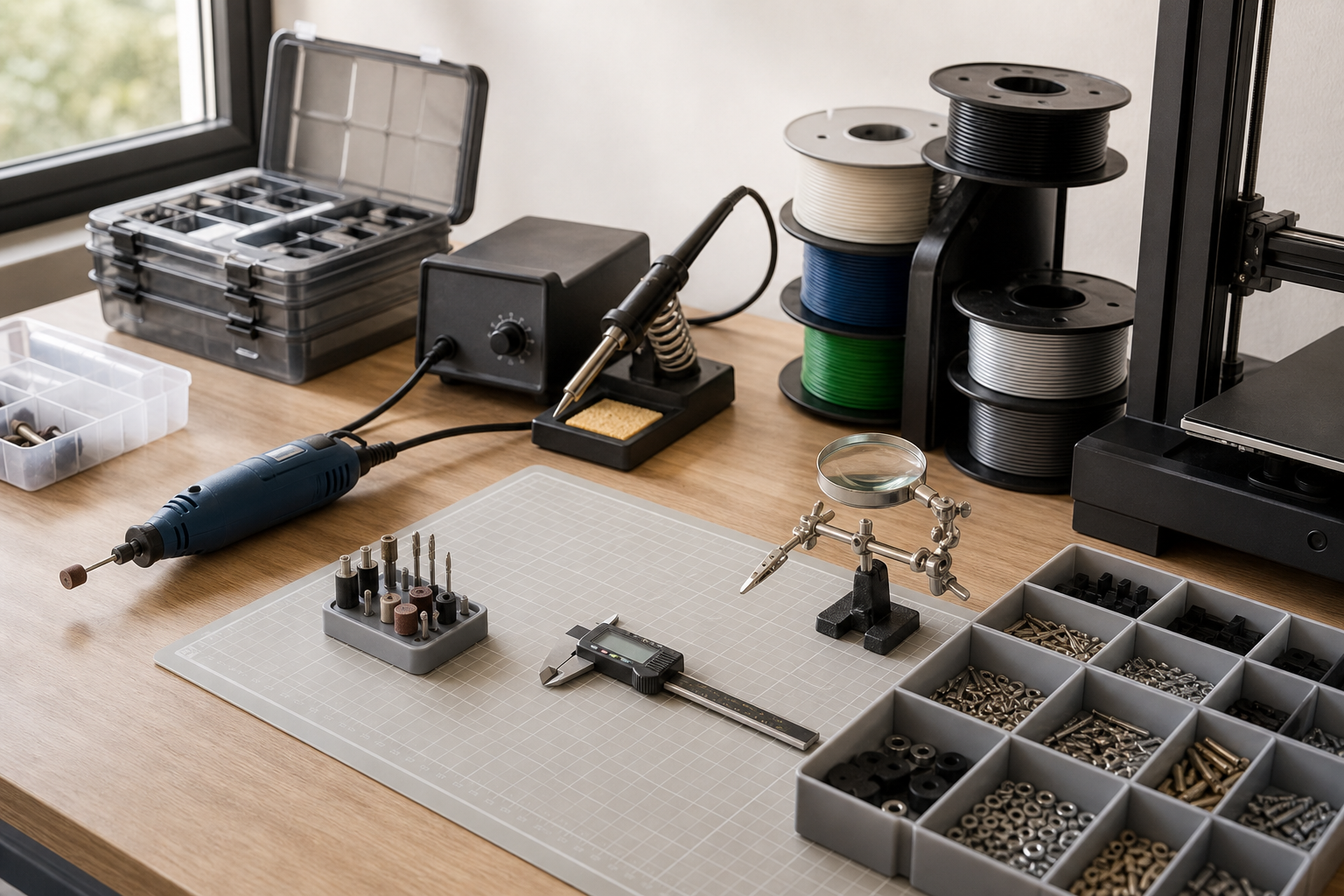
Start With The Work You Actually Do
The right tool depends on your materials, project frequency, and tolerance for setup time. A maker who trims printed parts once a month needs a different setup from someone who solders boards weekly and finishes enclosures by hand.
- For rotary tools, compare speed control, collet compatibility, accessory changes, and vibration.
- For soldering stations, look at temperature control, tip availability, stand stability, and warm-up behavior.
- For filament, check printer temperature range, storage needs, diameter tolerance, and material fit.
- For calipers, compare resolution, repeatability, display readability, and battery access.
Compare Usefulness, Not Just Price
A lower price can be reasonable for occasional work, but daily tools should feel stable, serviceable, and easy to organize. Use local shops, electronics retailers, marketplaces, and manufacturer pages as neutral places to verify price, delivery, return policy, and availability.
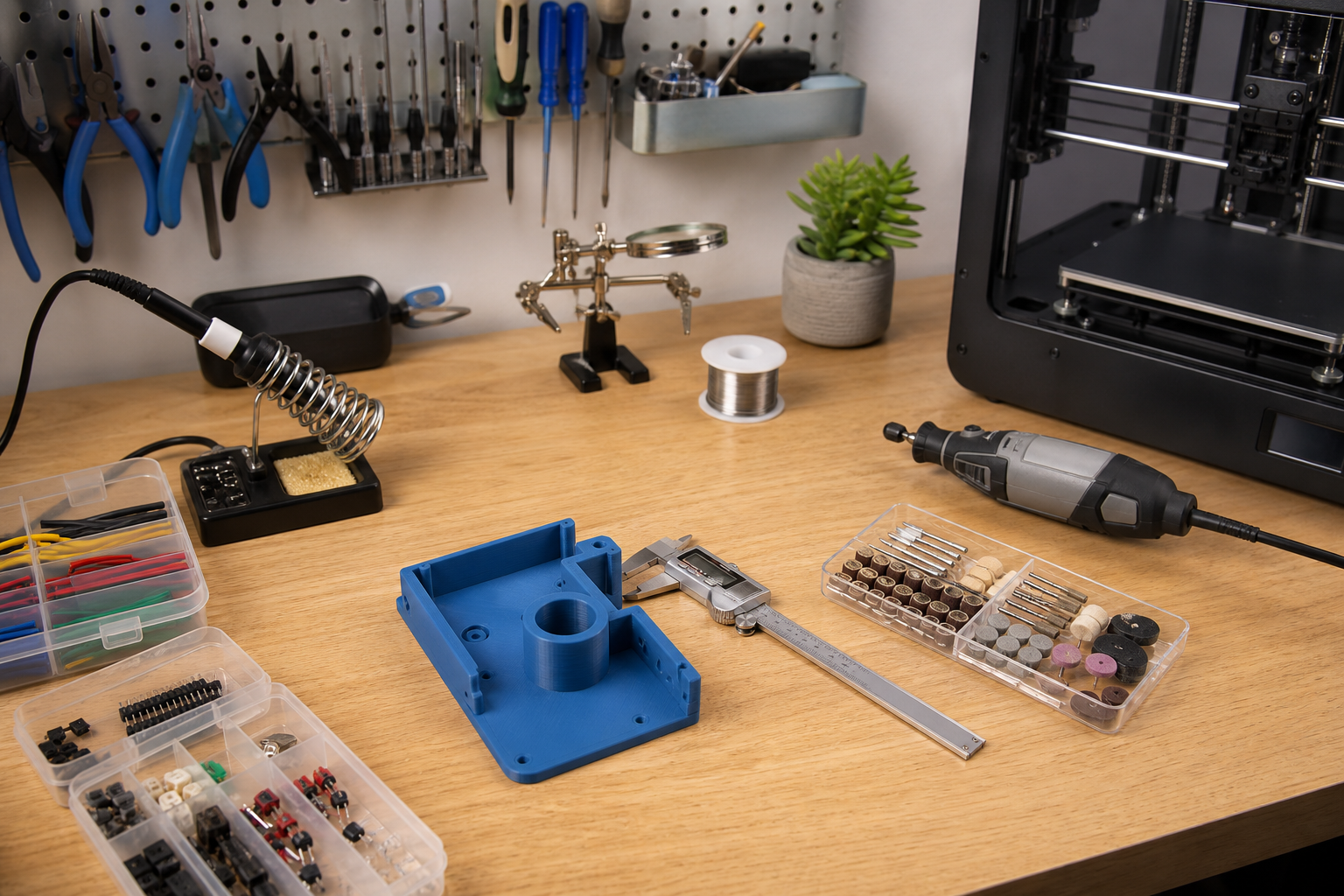
- Light rotary tools reduce fatigue in short sessions; vibration and heat matter more in longer sessions.
- A soldering station is easier to live with when tips are common and replacements are easy to find.
- PLA, PETG, ABS, and specialty filaments should match your printer, ventilation setup, and finishing plan.
- Tool organizers should fit the tools you own, not just look tidy when empty.
Build A System That Lasts
A durable maker toolbox is usually built in stages. Start with reliable core tools, then add accessories, consumables, and storage as your projects reveal real gaps.
- Test small quantities of filament, bits, solder, and tips before standardizing on a supply.
- Keep frequently used bits, nozzles, tips, and measuring tools in clearly separated compartments.
- Store calipers and precision tools in cases, away from dust, chips, and loose hardware.
- Prefer standard accessories when possible so upgrades and replacements stay flexible.
Frequently asked questions
What should I compare first?
A practical buying guide for choosing rotary tools, soldering stations, 3D printer filament, calipers, and tool organizers without relying on hype or short-term deals. Start with use frequency, dimensions, warranty, replacement parts, recent reviews, and the return policy before chasing the lowest price.
Should I check Amazon, Coupang, or AliExpress first?
Use Amazon and Coupang for fast delivery categories, then compare AliExpress for low-cost accessories, parts, and bundles.
Where should I confirm price and availability?
Prices, coupons, shipping times, and stock change often, so confirm the final details on the merchant page before buying.