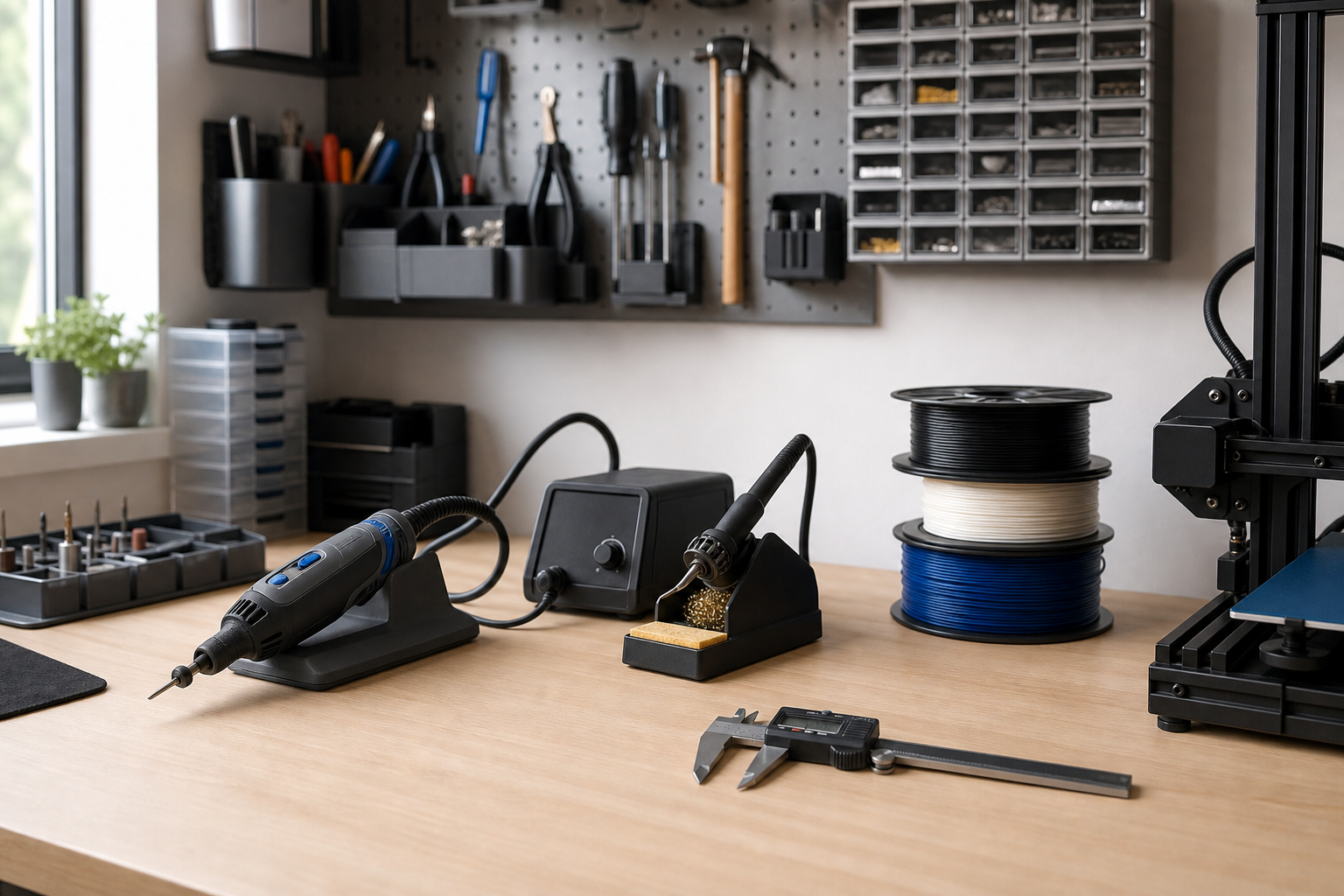
Start with the work you actually do
A useful tool purchase begins with your projects, not with a temporary deal or a top-spec label. List whether you mostly cut, grind, solder, post-process 3D prints, measure parts, or organize small hardware, then match the tool to that routine.
- For rotary tools, compare speed control, collet compatibility, vibration, and included bit types.
- For soldering stations, check temperature stability, tip availability, stand design, and warm-up behavior.
- For filament, review material type, diameter tolerance, storage needs, and printer temperature compatibility.
- For calipers, look at repeatability, display readability, jaw feel, and battery access.
Compare durability, fit, and upkeep
The best choice is often the tool that stays easy to use after months of normal shop work. Favor standard consumables, clear replacement paths, stable storage, and controls that make sense at the bench.
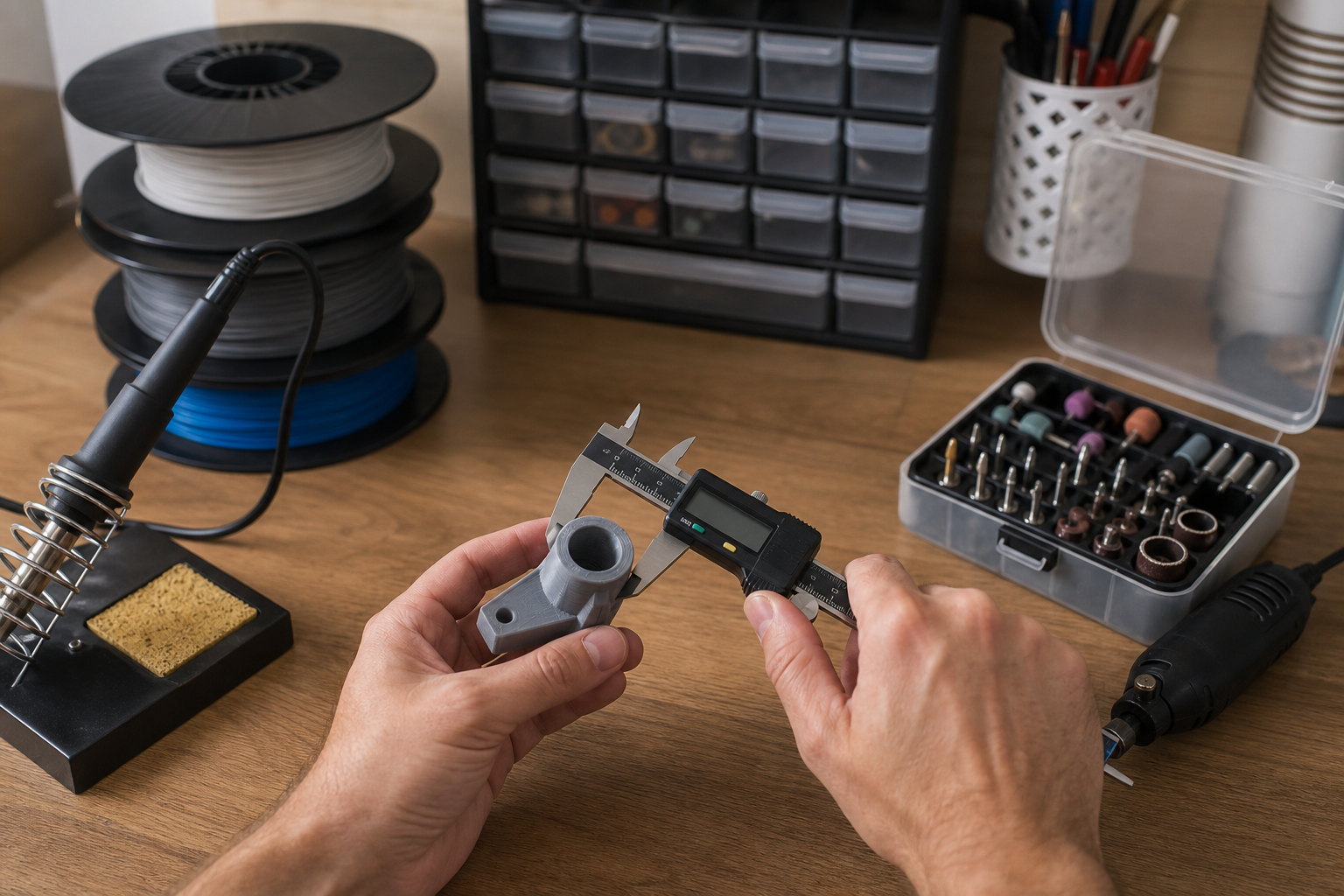
- Check whether bits, tips, nozzles, inserts, and batteries are common sizes.
- Measure your bench space before buying larger stations, storage units, or filament containers.
- Compare noise, heat, grip size, and cable length because they affect longer sessions.
- Use retailer sites, local stores, and manufacturer pages only to verify price, delivery, return policy, and availability.
Plan storage with the purchase
Maker tools work better when the accessories are easy to find and protect. Filament benefits from dry storage, soldering tips need a clean place, and rotary bits are easier to manage when separated by job type.
- Choose organizers with visible labels, small compartments, and room for future consumables.
- Start with a general accessory kit, then add specialized bits or tips after you know your habits.
- Keep calipers and measuring tools away from abrasive dust and loose cutting media.
- Read the manufacturer’s operating and maintenance guidance before and after purchase.
Frequently asked questions
What should I compare first?
A practical evergreen guide to choosing rotary tools, soldering stations, 3D printer filament, calipers, and tool organizers without relying on short-lived prices or rankings. Start with use frequency, dimensions, warranty, replacement parts, recent reviews, and the return policy before chasing the lowest price.
Should I check Amazon, Coupang, or AliExpress first?
Use Amazon and Coupang for fast delivery categories, then compare AliExpress for low-cost accessories, parts, and bundles.
Where should I confirm price and availability?
Prices, coupons, shipping times, and stock change often, so confirm the final details on the merchant page before buying.