Start With the Work You Actually Do
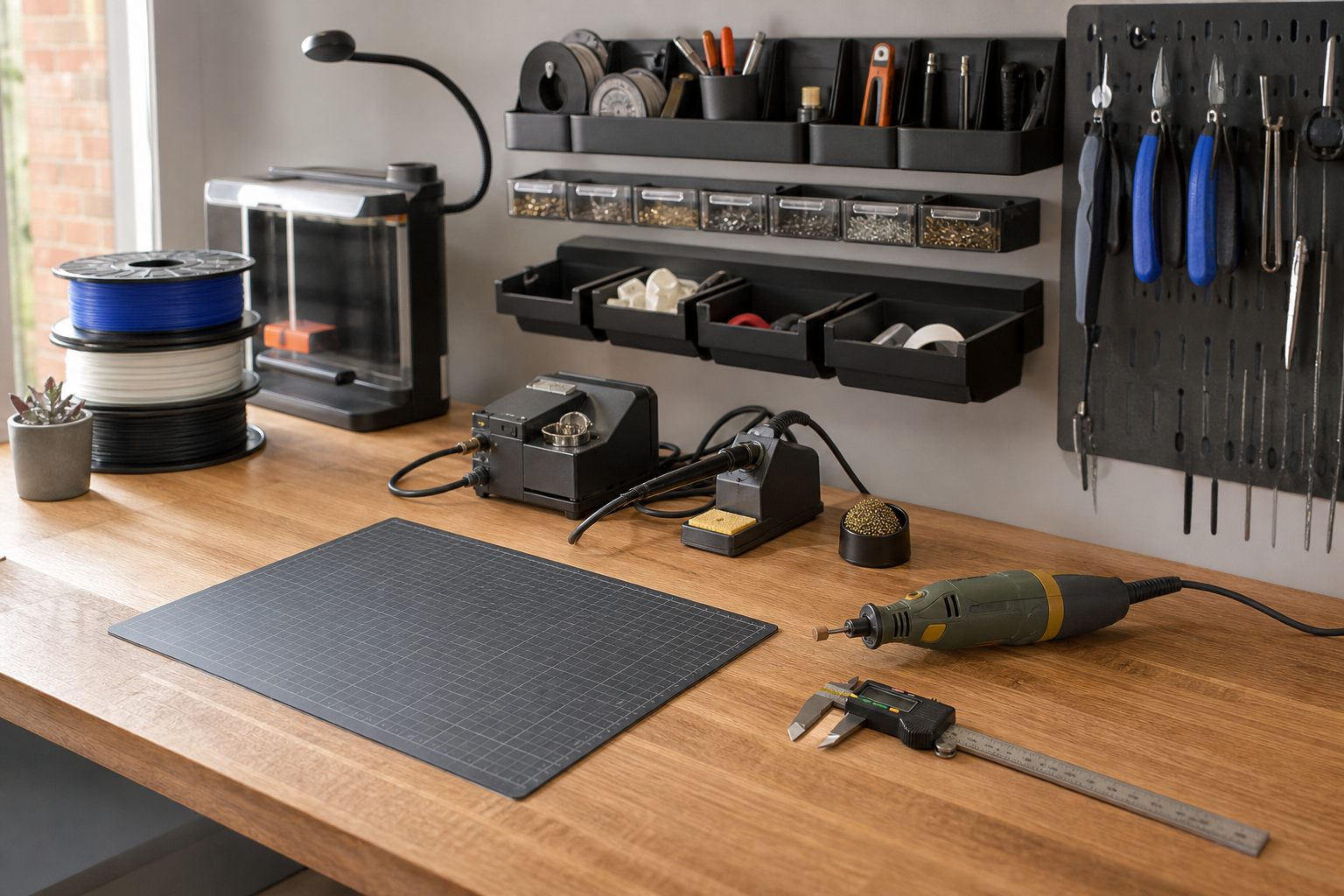
A useful toolbox starts with the tasks, not the gadget list. Cutting plastic, deburring metal, repairing electronics, and finishing 3D prints all point to different power, precision, and accessory needs.
- For rotary tools, compare speed control, collet compatibility, vibration, and bit availability.
- For soldering stations, look at temperature stability, tip selection, stand quality, and cable flexibility.
- For filament, check material type, diameter tolerance, storage condition, and printer compatibility.
- For calipers, prioritize repeatable readings, readable markings, smooth jaws, and easy battery access.
Compare Beyond the Sticker Price
The cheapest option is not always the lowest-cost tool over time. Consumables, spare parts, warranty terms, bench space, and setup friction can matter more than a small upfront difference.
Use manufacturer sites, online marketplaces, and local hardware stores as neutral places to verify price, delivery, return policy, and availability before buying.
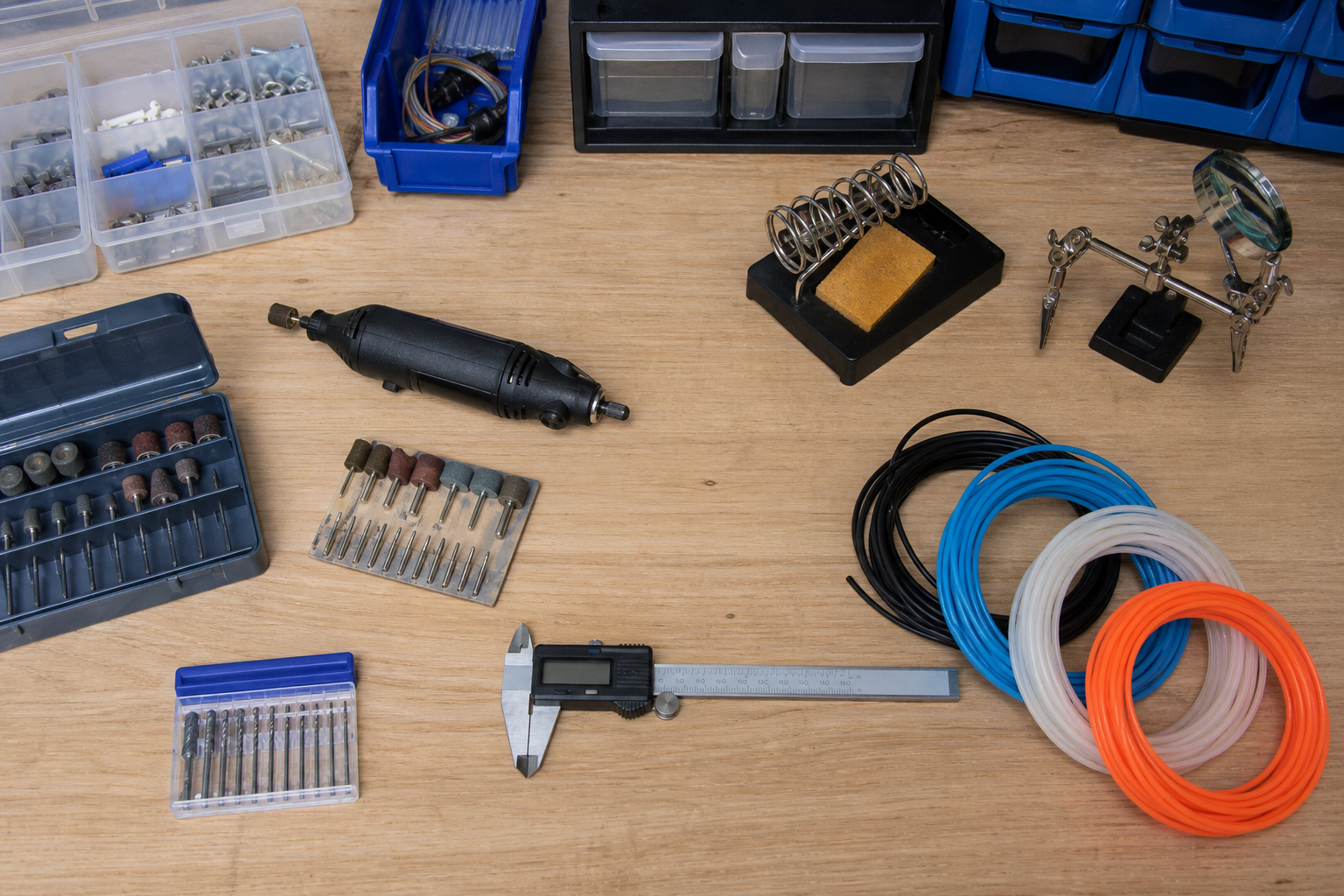
- Confirm that common bits, soldering tips, nozzles, and filament types are easy to replace.
- Handle comfort, switch placement, cable length, and stand stability affect daily use.
- Beginners usually benefit more from solid core tools than oversized accessory bundles.
- Tool organizers should match drawer depth, label habits, small-part storage, and future expansion.
Build a Setup That Ages Well
You do not need to buy every maker tool at once. A dependable rotary tool, a stable soldering station, accurate calipers, a few proven filament types, and modular storage can support a wide range of DIY and prototyping work.
- Test consumables in small quantities before committing to a long-term supply.
- Measurement tools and storage systems often improve results as much as powered tools do.
- Review ventilation, eye protection, heat handling, and material-specific precautions for each workflow.
- Before adding gear, check whether it fits your current accessories, bench layout, and storage system.
Frequently asked questions
What should I compare first?
A practical buying guide for choosing rotary tools, soldering stations, 3D printer filament, calipers, and tool organizers without relying on hype or short-term deals. Start with use frequency, dimensions, warranty, replacement parts, recent reviews, and the return policy before chasing the lowest price.
Should I check Amazon, Coupang, or AliExpress first?
Use Amazon and Coupang for fast delivery categories, then compare AliExpress for low-cost accessories, parts, and bundles.
Where should I confirm price and availability?
Prices, coupons, shipping times, and stock change often, so confirm the final details on the merchant page before buying.