Start With Your Workflows
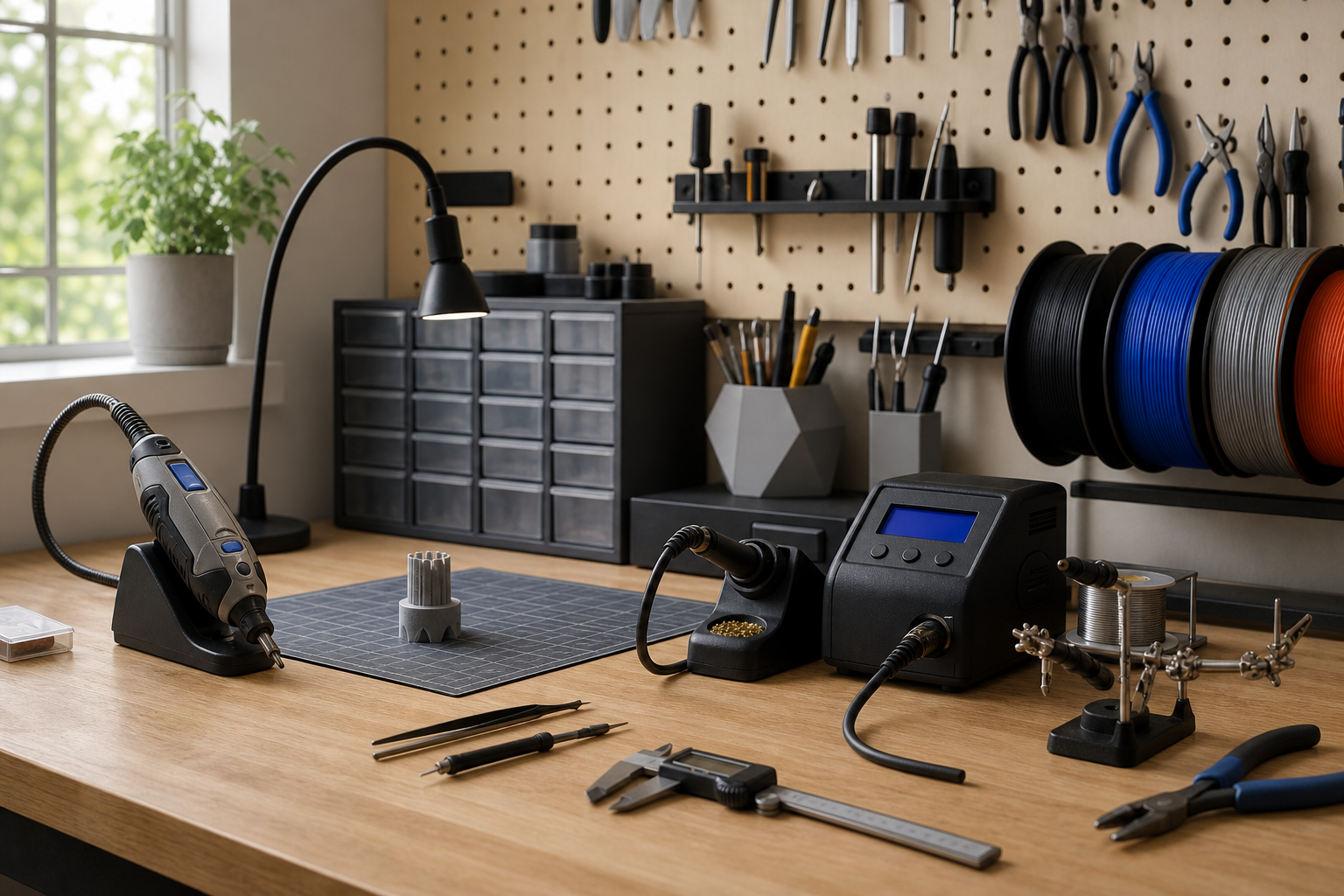
Before buying, define whether your projects are mostly wood, plastic, electronics, or 3D printed parts. A rotary tool for detail sanding, cutting, and drilling should be judged by speed control, grip comfort, and collet or bit compatibility.
For soldering stations, compare temperature stability, tip availability, stand design, and bench footprint. Stores such as Amazon, Home Depot, local tool shops, and electronics suppliers are best used to verify price, delivery, returns, and availability rather than as the only decision source.
- Choose rotary tools by speed range, accessory fit, balance, and control.
- Compare soldering stations by heat recovery, tip ecosystem, holder stability, and service parts.
- Cross-check included accessories and consumables against manufacturer documentation.
Match Filament and Measurement Tools
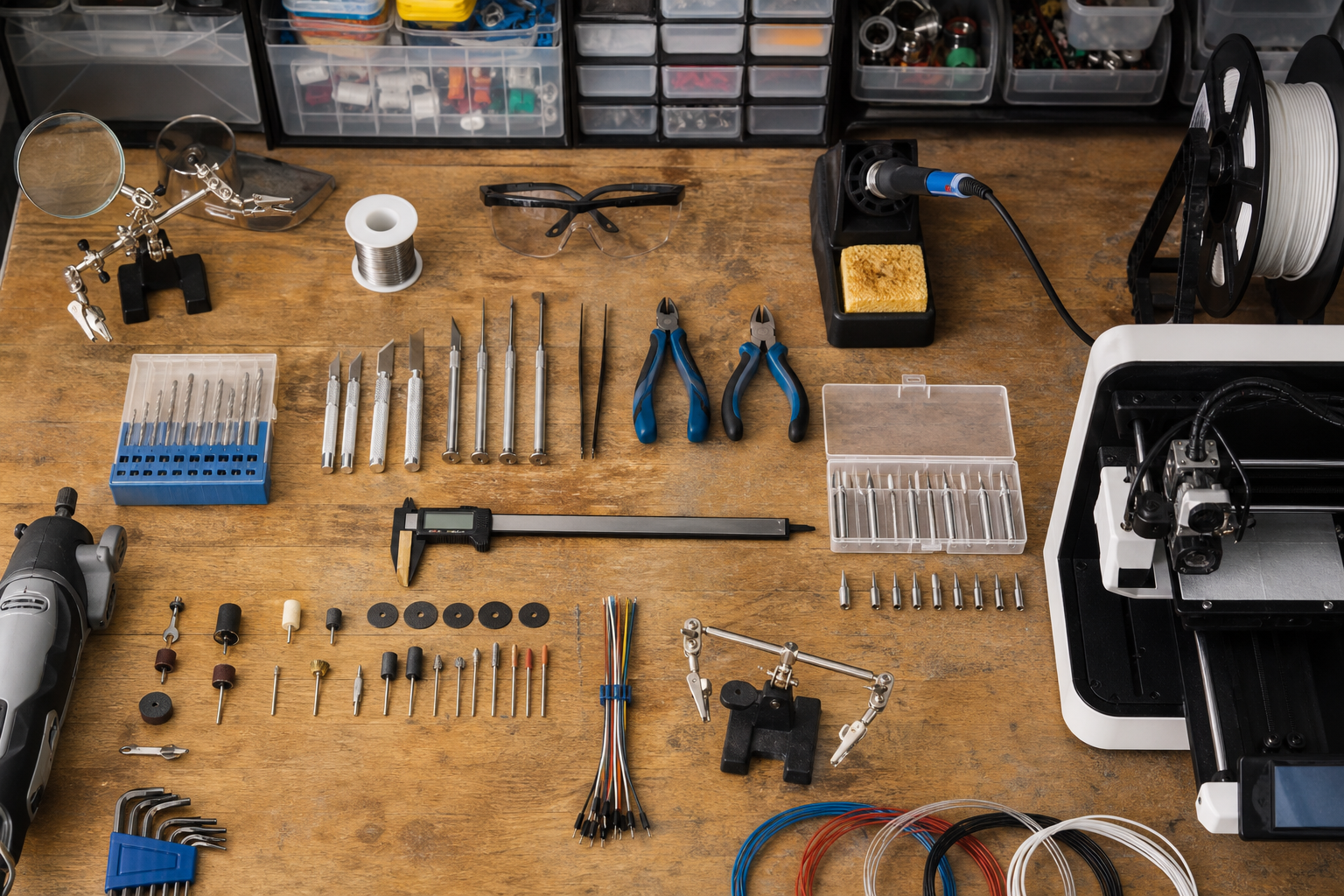
Filament choice should match your printer, nozzle size, recommended temperatures, and printing environment. PLA is often approachable, while PETG can be useful for durable functional parts, but storage humidity and bed adhesion still matter.
For calipers, choose between digital, dial, and vernier styles based on reading comfort and measurement frequency. If you regularly fit 3D printed parts, look for repeatable readings, easy zeroing, clear display quality, and a battery format you can maintain.
- Compare filament by material, diameter, temperature range, spool quality, and storage needs.
- Judge calipers by resolution, repeatability, build quality, and readable scales.
- For precision work, manage both measuring tools and printer calibration together.
Organize Before You Upgrade
A tool organizer is part of the workflow, not just storage. Modular bins, drawers, and labeled compartments help separate bits, soldering tips, nozzles, spare fasteners, and filament samples on a compact bench.
Before purchasing, verify manufacturer details and retailer terms. Useful reference checks include Dremel https://www.dremel.com/us/en/service-and-support/getting-started, HAKKO https://www.hakko.com/english/products/, Prusa https://help.prusa3d.com/filament-material-guide, and Mitutoyo https://www.mitutoyo.com/metrology-insights/mitutoyo-calipers-digital-dial-and-vernier-calipers-precision-measurement-tools-for-manufacturing/
- Check return policy, delivery timing, warranty terms, and replacement consumables.
- Make sure the tools you use most can sit within easy reach.
- Treat large kits cautiously if many accessories do not match your actual projects.
Frequently asked questions
What should I compare first?
A concise evergreen guide to choosing rotary tools, soldering stations, 3D printer filament, calipers, and tool organizers using practical buyer criteria. Start with use frequency, dimensions, warranty, replacement parts, recent reviews, and the return policy before chasing the lowest price.
Should I check Amazon, Coupang, or AliExpress first?
Use Amazon and Coupang for fast delivery categories, then compare AliExpress for low-cost accessories, parts, and bundles.
Where should I confirm price and availability?
Prices, coupons, shipping times, and stock change often, so confirm the final details on the merchant page before buying.