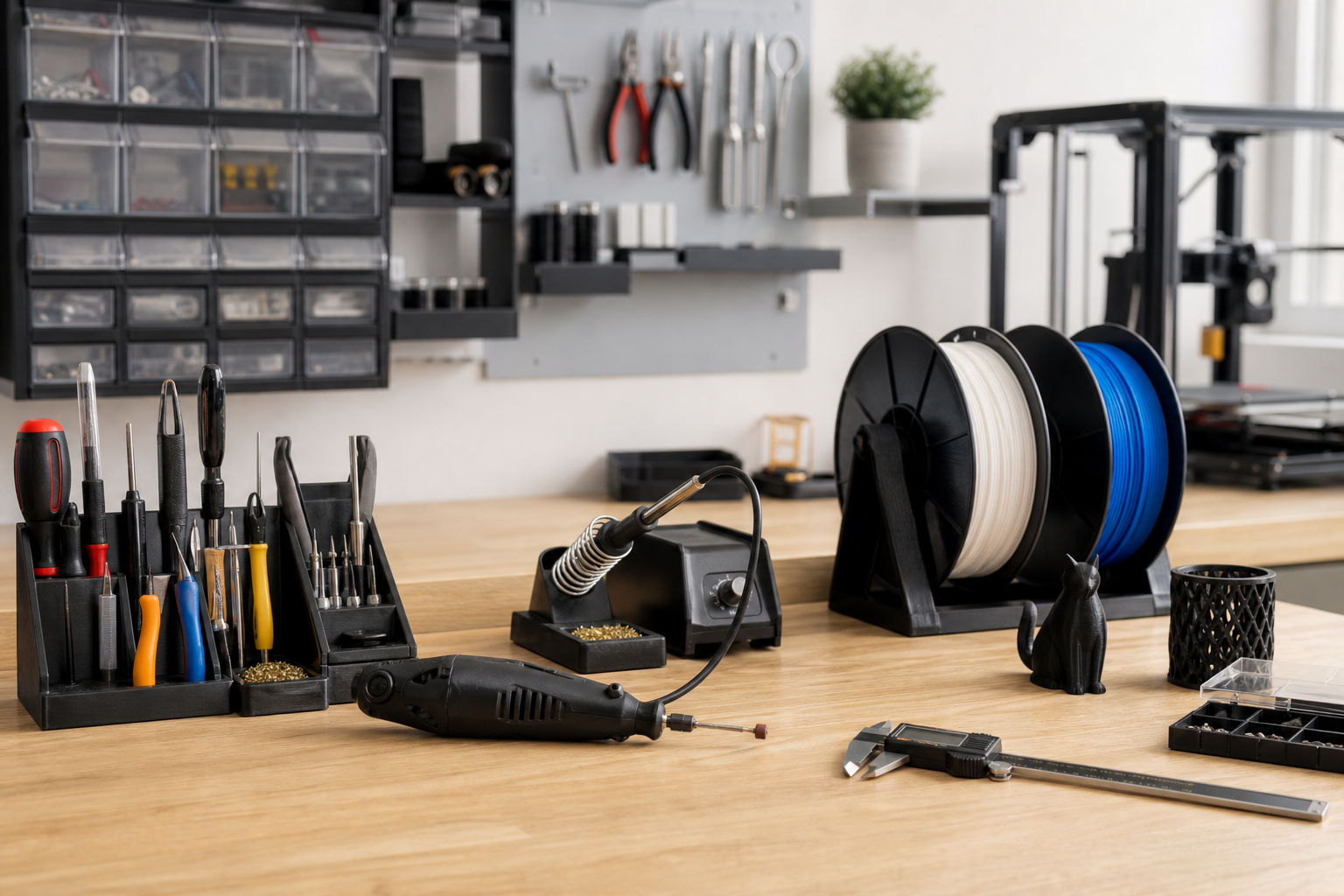
Start with the work you actually do
Before comparing tools, define the materials, precision level, and frequency of your projects. Wood, plastic, metal, electronics, and post-processing 3D prints all place different demands on power, temperature control, measurement accuracy, and accessory compatibility.
- For rotary tools, compare speed control, collet sizes, bit quality, and grip comfort.
- For soldering stations, check temperature stability, tip availability, stand design, and cable flexibility.
- For calipers, compare display readability, zeroing behavior, battery access, and jaw alignment.
- For organizers, match drawer depth, divider flexibility, and footprint to your bench.
Treat 3D printing supplies as system parts
Filament should be chosen by printer compatibility and project use, not color alone. PLA is generally easy for everyday prints, while PETG, ABS-style materials, and specialty blends require closer attention to temperature, enclosure needs, storage, and ventilation.
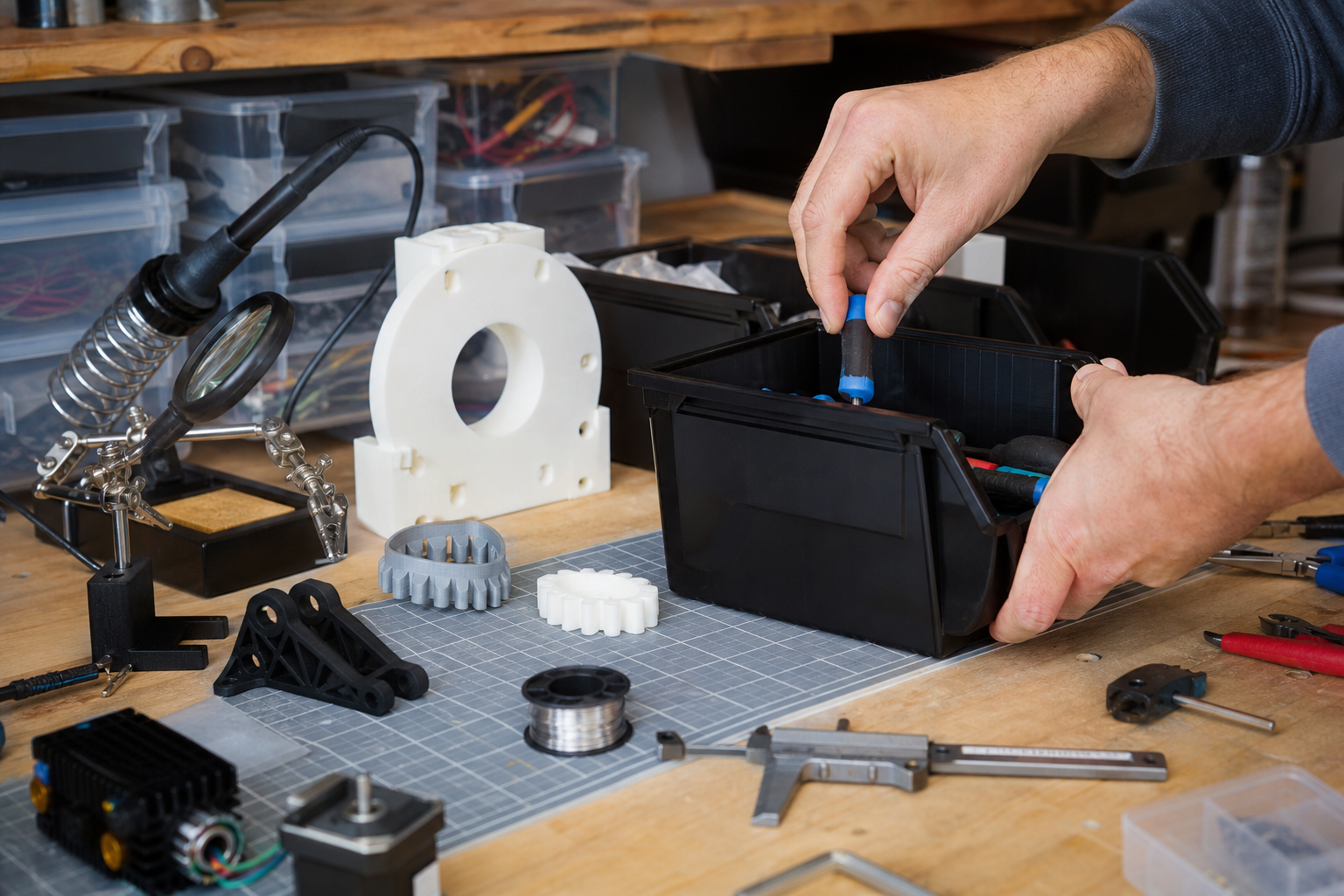
- Confirm filament diameter and the printer’s recommended nozzle and bed temperatures.
- Check whether spool width and diameter fit your holder, dryer, or storage box.
- Plan storage with sealed bags, desiccant, or a filament dryer when humidity matters.
- Run small test prints to compare warping, layer adhesion, and surface finish before buying more.
Compare ownership cost, not just shelf price
A practical tool purchase includes maintenance and replacement parts. Bits, soldering tips, nozzles, blades, batteries, and storage inserts should be easy to source. Use manufacturer sites, online marketplaces, and local hardware stores as neutral places to verify price, delivery, return policy, and availability.
- Check whether common consumables are sold separately and in standard sizes.
- Compare warranty terms and return windows before choosing a seller.
- Be cautious with large low-cost kits if most accessories will remain unused.
- Choose storage that can expand as your tool collection grows.
Frequently asked questions
What should I compare first?
A practical evergreen guide to choosing rotary tools, soldering stations, 3D printer filament, calipers, and tool organizers with neutral comparison criteria. Start with use frequency, dimensions, warranty, replacement parts, recent reviews, and the return policy before chasing the lowest price.
Should I check Amazon, Coupang, or AliExpress first?
Use Amazon and Coupang for fast delivery categories, then compare AliExpress for low-cost accessories, parts, and bundles.
Where should I confirm price and availability?
Prices, coupons, shipping times, and stock change often, so confirm the final details on the merchant page before buying.