Start With the Work You Actually Do
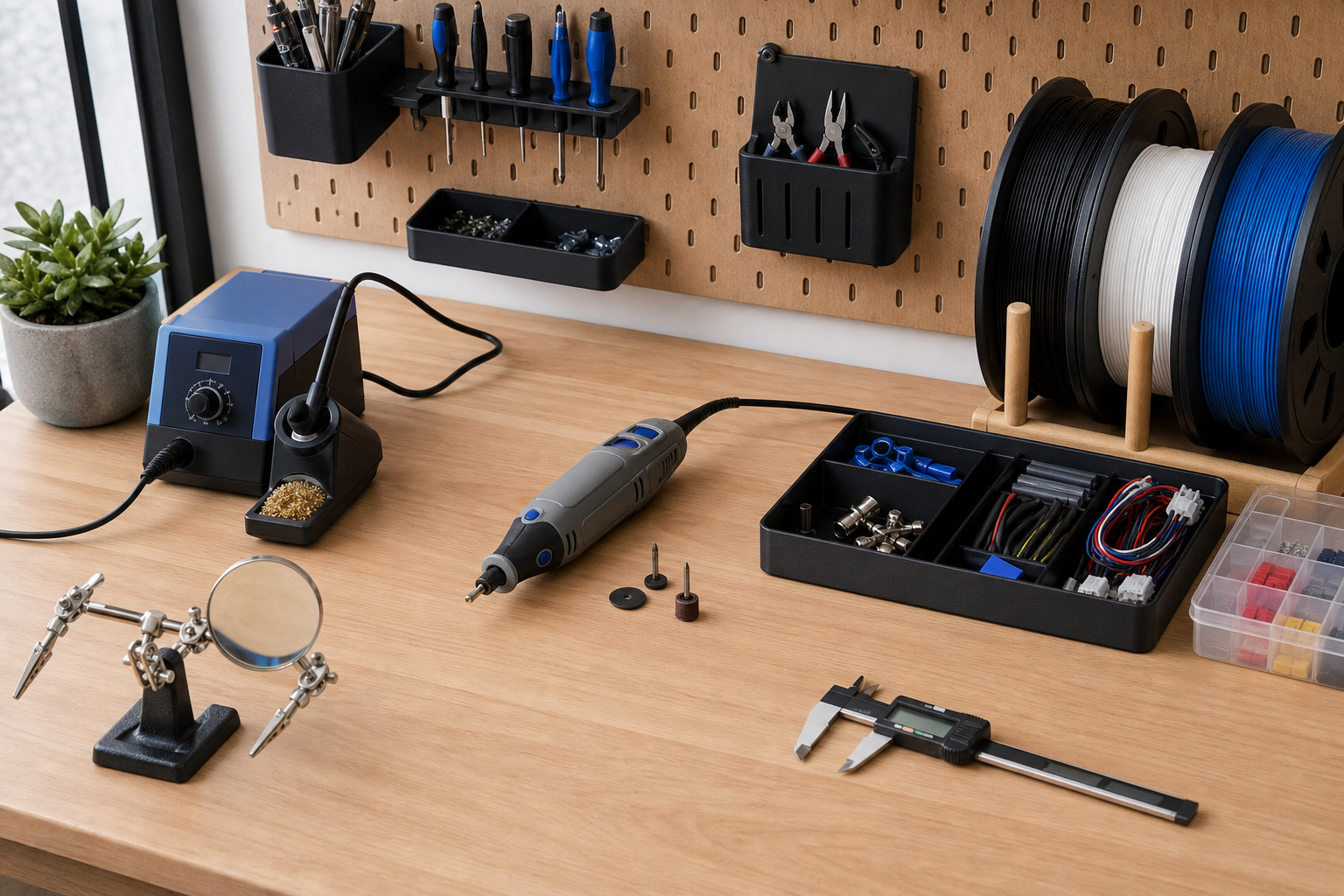
A useful tool purchase starts with your projects, not the longest feature list. Define whether you mainly cut, grind, polish, solder electronics, measure parts, organize small hardware, or tune 3D prints, then match tools to that workload.
- For rotary tools, compare speed control, collet compatibility, grip comfort, and included bits.
- For soldering stations, look at temperature stability, tip availability, stand design, and cable flexibility.
- For filament, compare material type, diameter tolerance, winding quality, moisture handling, and printer compatibility.
- For calipers, prioritize repeatable readings, clear display or scale, smooth jaws, and easy battery access.
Compare Total Usability, Not Just Price
The lowest price is only one part of the decision. A tool that feels balanced, accepts common accessories, and has easy-to-find consumables may be more practical over time. Use marketplaces and local stores neutrally to verify price, delivery time, return policy, and availability.
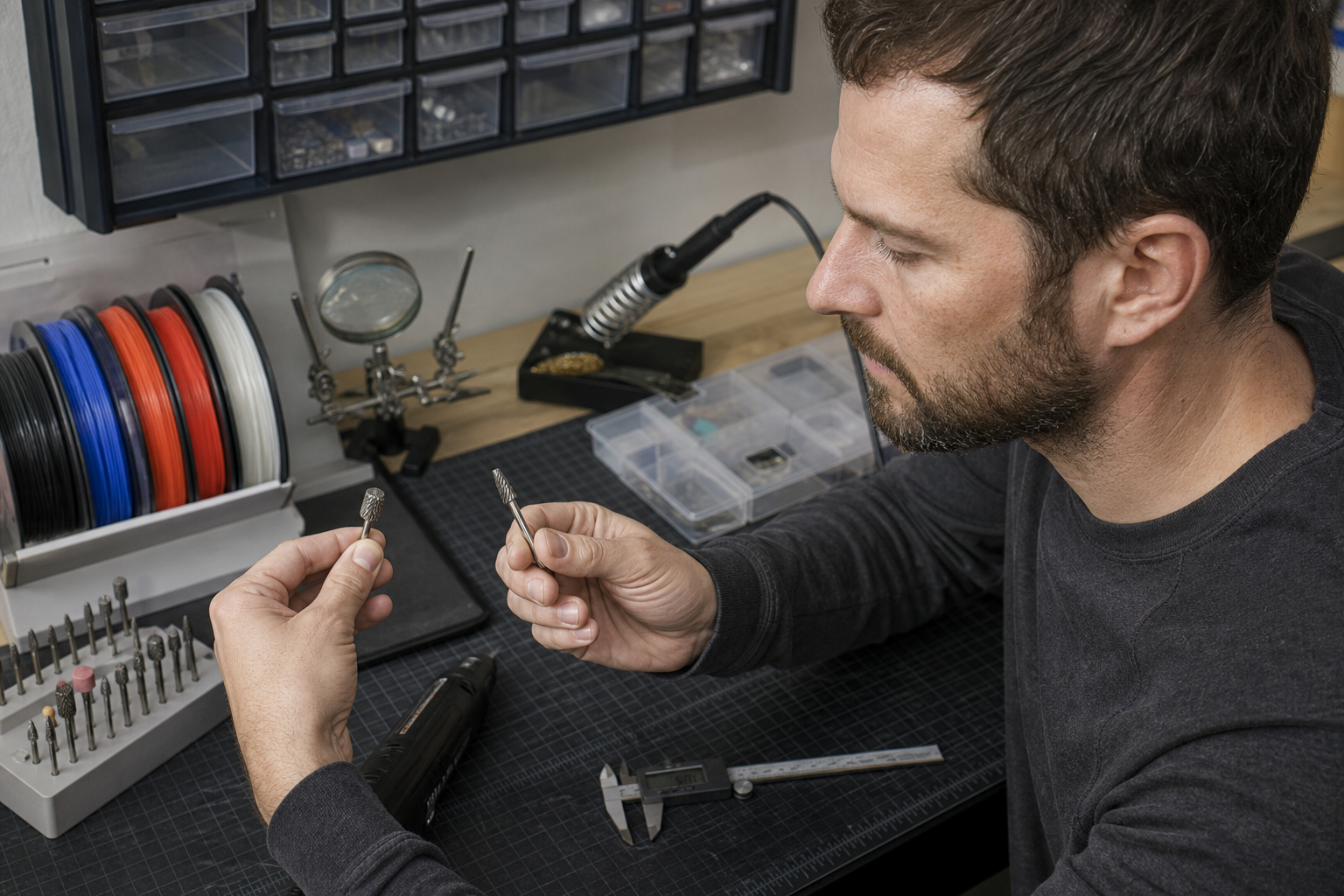
- Rotary tool performance often depends as much on bit quality as motor power.
- A soldering station should recover heat well during real joints, not only advertise a high temperature range.
- Filament reliability depends on storage, spool winding, and consistent extrusion more than color choice alone.
- Tool organizers should fit current tools while leaving room for future fasteners, bits, tips, and printer parts.
Choose Gear That Can Grow With Your Bench
A maker workbench evolves. Start with solid core tools, then add specialty bits, soldering tips, nozzles, measuring aids, and storage modules once your repeat tasks are clear.
- Favor standard accessory formats when possible.
- Check whether replacement tips, bits, belts, trays, and batteries are easy to source.
- Treat measurement tools and organizers as productivity tools, not afterthoughts.
- Read reviews through the lens of projects similar to yours, not generic star ratings.
Frequently asked questions
What should I compare first?
A practical, evergreen framework for choosing rotary tools, soldering stations, 3D printer filament, calipers, and tool organizers. Start with use frequency, dimensions, warranty, replacement parts, recent reviews, and the return policy before chasing the lowest price.
Should I check Amazon, Coupang, or AliExpress first?
Use Amazon and Coupang for fast delivery categories, then compare AliExpress for low-cost accessories, parts, and bundles.
Where should I confirm price and availability?
Prices, coupons, shipping times, and stock change often, so confirm the final details on the merchant page before buying.