Start With the Work You Actually Do
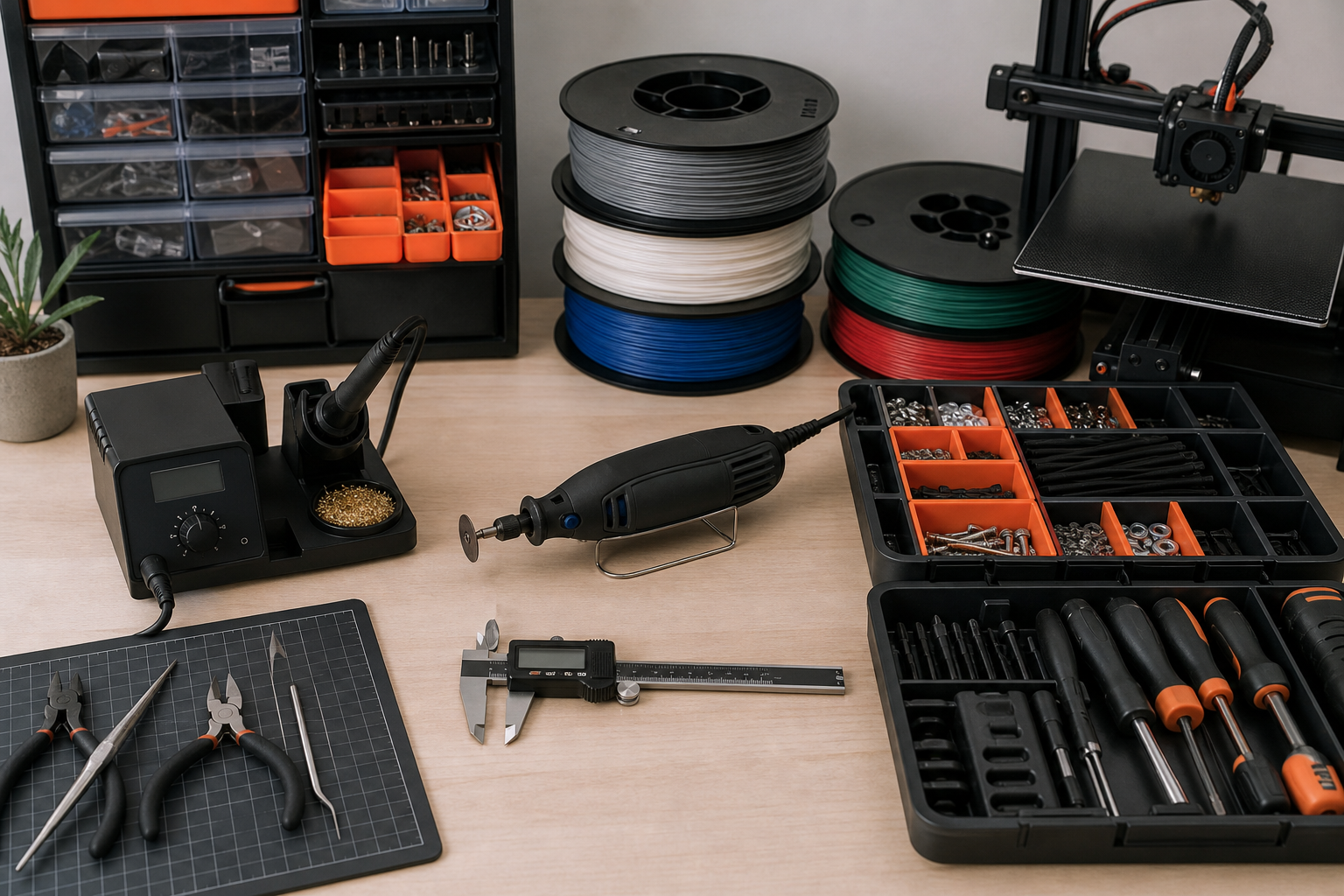
A useful buying decision starts with your projects, not the product category. For cutting, sanding, engraving, and cleanup, compare rotary tools by speed control, bit compatibility, grip, and vibration. For electronics repair or kit building, focus on soldering station temperature control, tip availability, and stand stability.
For 3D printer filament, match the material to your printer temperature range, bed setup, and storage habits. Calipers and tool organizers should be judged by readability, repeatability, durability, and how naturally they fit into your bench workflow.
- Rotary tools: compare speed range, collet or chuck type, and included bits.
- Soldering stations: check temperature control, replaceable tips, and a stable holder.
- Filament: compare material type, diameter tolerance, spool quality, and storage needs.
- Calipers: look at display clarity, zeroing feel, battery access, and jaw smoothness.
Compare Daily Use, Not Just Specs
Specification tables are useful, but comfort and workflow often decide whether a tool gets used. A rotary tool that is too heavy or harsh may stay in a drawer. A soldering station with awkward controls can slow small repairs even if the wattage looks adequate.
Tool organizers deserve the same practical comparison. The best option is not always the largest one; it is the one that keeps bits, nozzles, soldering tips, fasteners, and measuring tools visible and easy to return after use.
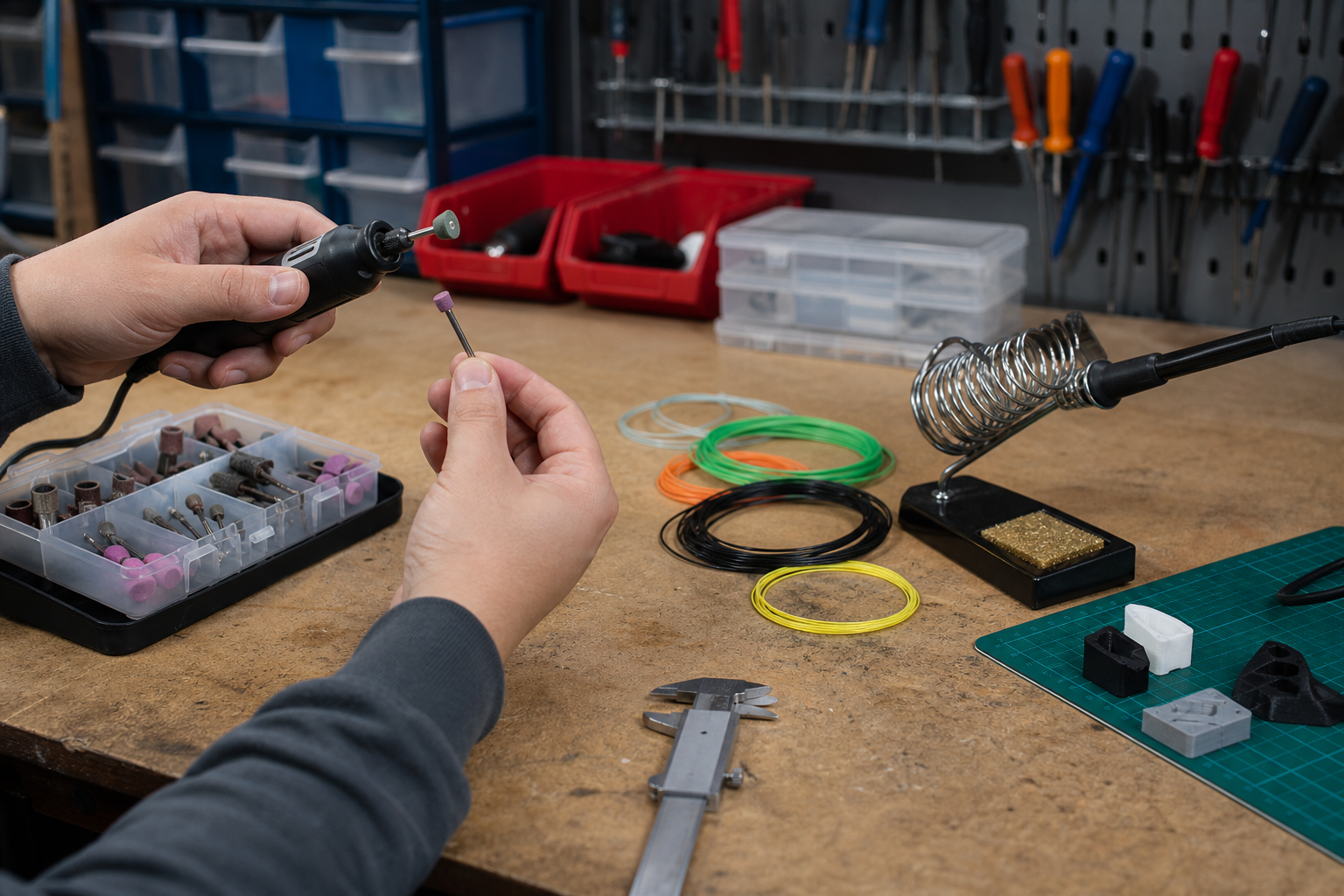
- Check whether accessories and consumables are easy to replace in the same standard.
- For small benches, compare vertical storage, drawer depth, and modular bins.
- Consider noise, heat, cable length, and bench footprint before choosing.
- Review manuals, replacement parts, and basic warranty terms before buying.
Final Checks Before You Buy
Use marketplaces, specialist tool shops, and manufacturer stores as neutral places to verify price, delivery timing, return policy, and availability. Listings can differ in included accessories, regional plugs, spool size, or bundled storage.
A staged setup is usually more practical than buying everything at once. Start with the tools tied to your most frequent work, then add consumables, measuring tools, and organizers as your projects reveal what you actually reach for.
- Read the included-parts list instead of relying only on product photos.
- For filament, confirm printer compatibility and storage requirements.
- For calipers, check unit switching, lock function, and stated resolution.
- Compare return windows, shipping costs, and replacement-part availability.
Frequently asked questions
What should I compare first?
Compare rotary tools, soldering stations, 3D printer filament, calipers, and tool organizers by practical workshop criteria rather than hype. Start with use frequency, dimensions, warranty, replacement parts, recent reviews, and the return policy before chasing the lowest price.
Should I check Amazon, Coupang, or AliExpress first?
Use Amazon and Coupang for fast delivery categories, then compare AliExpress for low-cost accessories, parts, and bundles.
Where should I confirm price and availability?
Prices, coupons, shipping times, and stock change often, so confirm the final details on the merchant page before buying.