Start with the work you do most
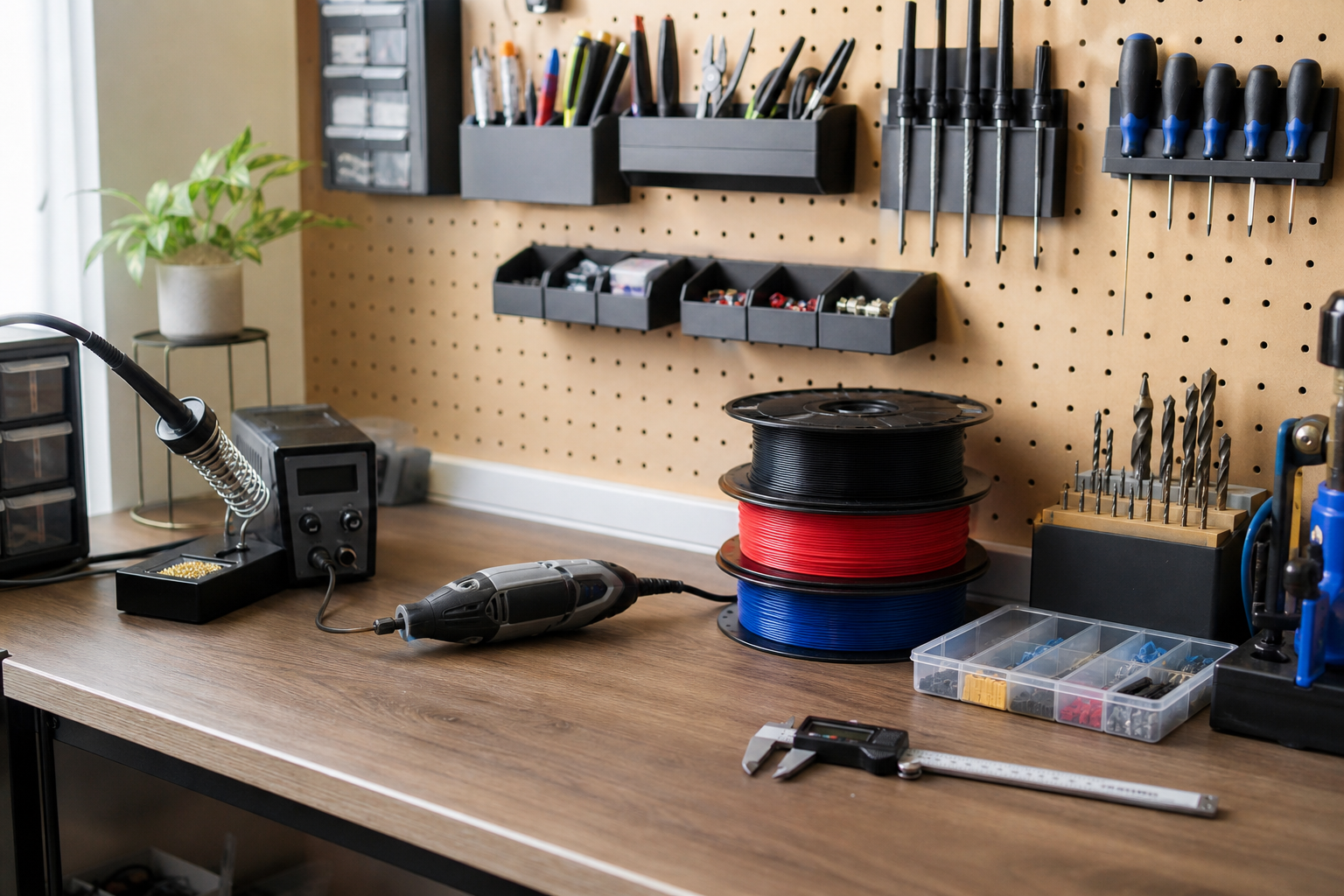
A useful buying guide begins with the jobs on your bench, not with the biggest kit or flashiest spec sheet. List the recurring tasks first: cutting plastic, sanding wood, repairing electronics, measuring printed parts, or cleaning up 3D prints.
- For rotary tools, compare speed control, grip comfort, bit changes, vibration, and accessory compatibility.
- For soldering stations, look at temperature stability, tip availability, stand design, heat-up time, and cable flexibility.
- For filament, match diameter, material, print temperature, storage needs, and printer profile support.
- For calipers, prioritize repeatable measurement, readable markings, smooth jaws, battery access, and depth measurement.
Compare features that affect daily use
Maker equipment earns its place through workflow. A compact tool that is comfortable, repairable, and easy to store can be more useful than a larger bundle with accessories you rarely touch.
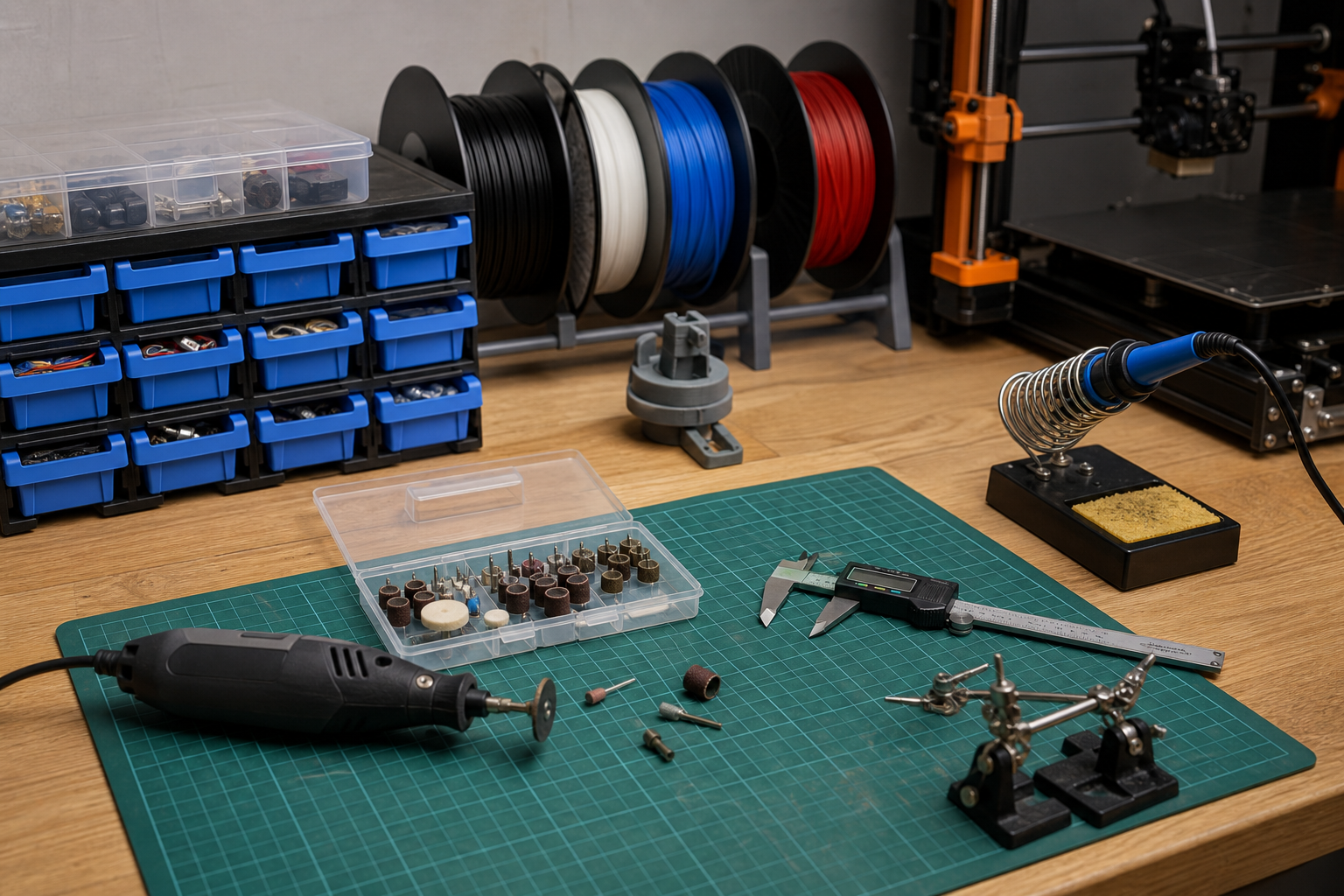
- Rotary tool kits should include the bits you actually use, not just a high accessory count.
- Soldering stations are easier to live with when they include clear temperature control, tip cleaning, and a stable holder.
- Filament choice should consider moisture sensitivity, spool winding, material difficulty, and surface finish expectations.
- Tool organizers should be judged by adjustable dividers, drawer depth, visibility, footprint, and whether they fit your bench.
Check the final buying signals
Before buying, use marketplaces, specialist tool shops, and manufacturer pages as neutral places to verify price, delivery, return policy, warranty coverage, replacement parts, and availability. Do not treat any single listing as the whole comparison.
- Narrow similar tools by your use case and maintenance path rather than by maximum power alone.
- For precision items like calipers and soldering tips, read long-term user feedback where available.
- For filament, compare printer compatibility notes and sample prints, but avoid assuming identical results.
- A balanced starter setup usually includes a rotary tool, reliable soldering station, accurate calipers, dry filament storage, and modular organizers.
Frequently asked questions
What should I compare first?
A practical guide to choosing rotary tools, soldering stations, 3D printer filament, calipers, and tool organizers without relying on hype or short-lived deals. Start with use frequency, dimensions, warranty, replacement parts, recent reviews, and the return policy before chasing the lowest price.
Should I check Amazon, Coupang, or AliExpress first?
Use Amazon and Coupang for fast delivery categories, then compare AliExpress for low-cost accessories, parts, and bundles.
Where should I confirm price and availability?
Prices, coupons, shipping times, and stock change often, so confirm the final details on the merchant page before buying.