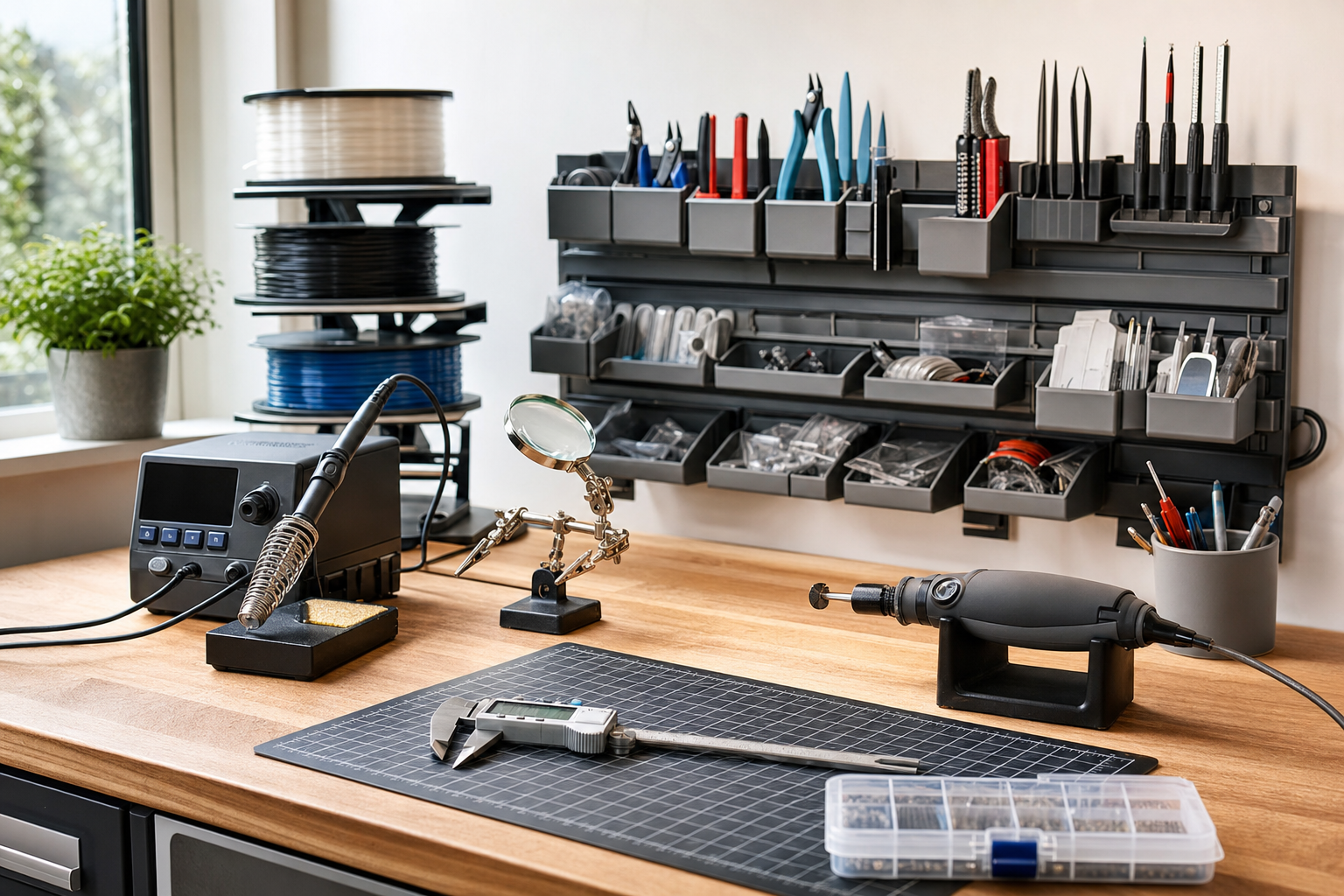
Start with the work you actually do
A good purchase is less about chasing the highest specification and more about matching tools to real tasks. List the jobs you repeat most often, such as trimming plastic, sanding printed parts, repairing electronics, or measuring small assemblies, then choose around those needs.
- For rotary tools, compare variable speed, collet compatibility, grip comfort, and bit changes.
- For soldering stations, check temperature stability, standard tip support, stand quality, and tip cleaning setup.
- For filament, compare diameter tolerance, winding quality, material fit, and dry-storage needs.
- For calipers and organizers, look for repeatable readings, locking features, labeling options, and practical drawer depth.
Compare the total cost of ownership
The shelf price does not show the full cost. Bits, soldering tips, nozzles, desiccant, storage bins, and replacement parts can matter as much as the tool itself over time.
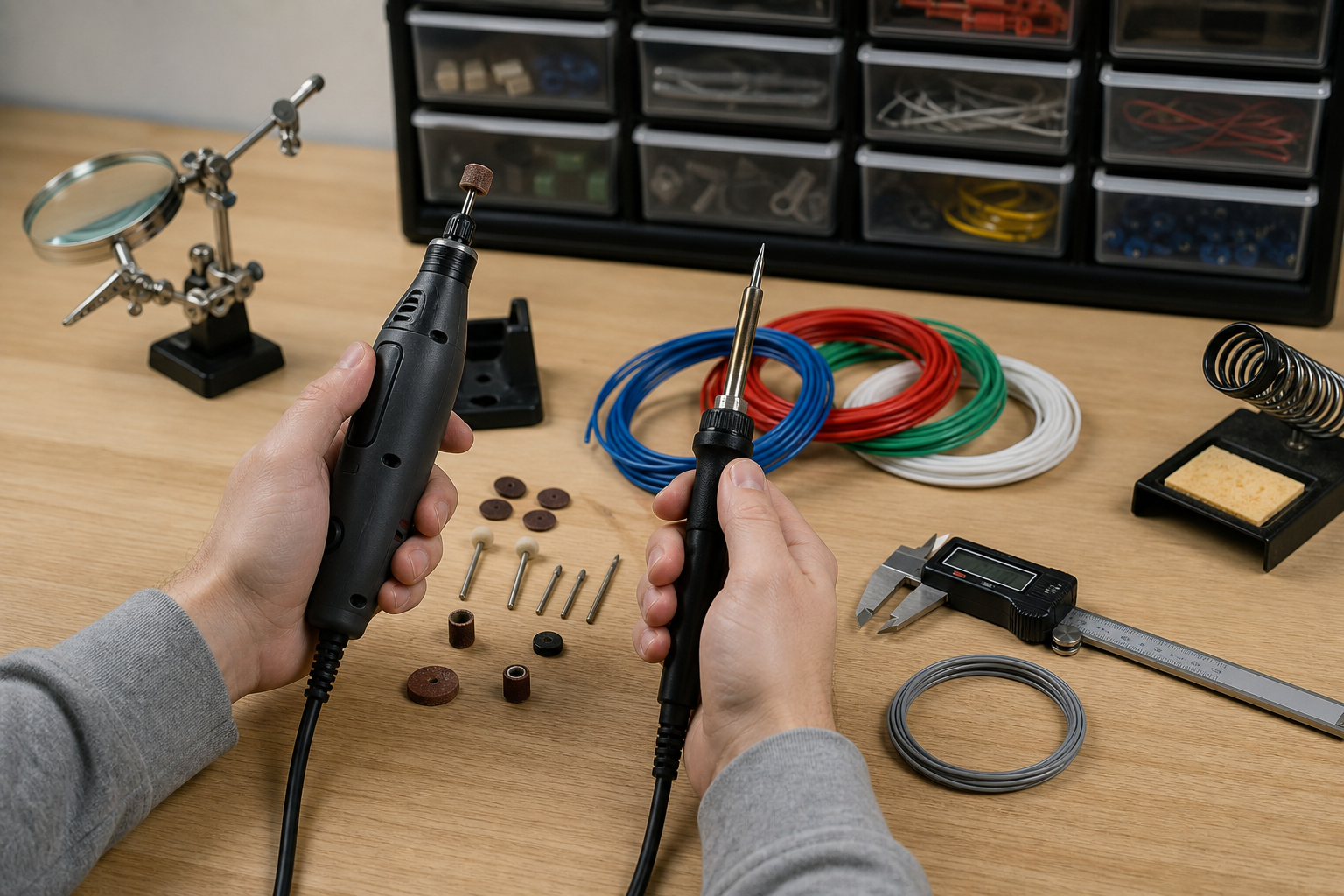
- Check whether the included accessories are useful or mostly filler.
- Confirm that consumables such as tips, bits, nozzles, and filament are easy to replace.
- Consider repair parts, warranty terms, and the clarity of the manual for tools you expect to keep.
- Use hardware stores, maker shops, and online marketplaces to verify price, delivery, return policy, and availability.
Build a balanced starter kit
For a small workshop, balance measuring, cutting, joining, printing, and storage instead of overspending in one category. Reliable midrange tools with standard accessories usually leave more room to grow than niche gear with limited support.
- For electronics, prioritize an adjustable soldering station, fine tips, and a stable work surface.
- For 3D printing, choose consistent PLA or PETG, dry storage, and basic nozzle-cleaning tools.
- For finishing work, the right bit set and speed control matter more than raw motor claims.
- For organizers, choose a layout with about 20 percent spare capacity so the system can expand.
Frequently asked questions
What should I compare first?
A practical guide to choosing rotary tools, soldering stations, 3D printer filament, calipers, and tool organizers without relying on hype or short-term deals. Start with use frequency, dimensions, warranty, replacement parts, recent reviews, and the return policy before chasing the lowest price.
Should I check Amazon, Coupang, or AliExpress first?
Use Amazon and Coupang for fast delivery categories, then compare AliExpress for low-cost accessories, parts, and bundles.
Where should I confirm price and availability?
Prices, coupons, shipping times, and stock change often, so confirm the final details on the merchant page before buying.