Start With Your Actual Projects
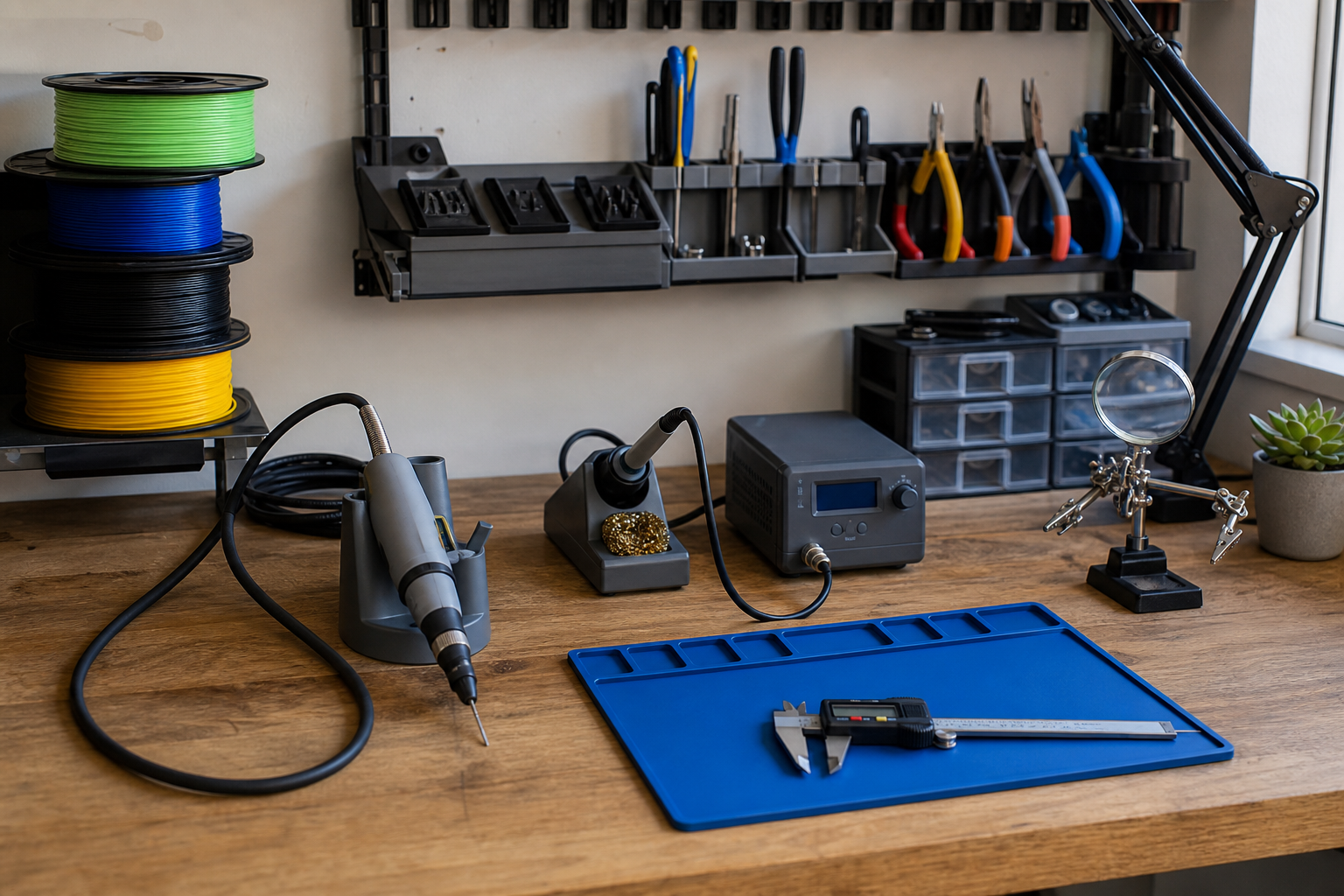
A useful buying guide starts with the work you repeat, not with the loudest product claim. If you cut, grind, engrave, or polish often, compare rotary tools by speed control, grip comfort, vibration, and bit compatibility. If you build or repair electronics, focus on soldering station temperature stability, tip availability, and stand design.
- For 3D printing, compare filament material, diameter tolerance, moisture sensitivity, and printer temperature range.
- For measuring work, look at caliper repeatability, display clarity, jaw alignment, and battery access.
- For storage, match organizer depth, divider flexibility, and labeling options to your parts collection.
- Use stores and marketplaces only to verify price, delivery, return policy, and availability.
Compare the Specifications That Matter
Spec sheets are most useful when tied to your workflow. A rotary tool with many accessories is not automatically better if the collet size is awkward or replacement bits are hard to find. A soldering station should be judged by temperature recovery, tip ecosystem, cable flexibility, and base stability, not just peak wattage.
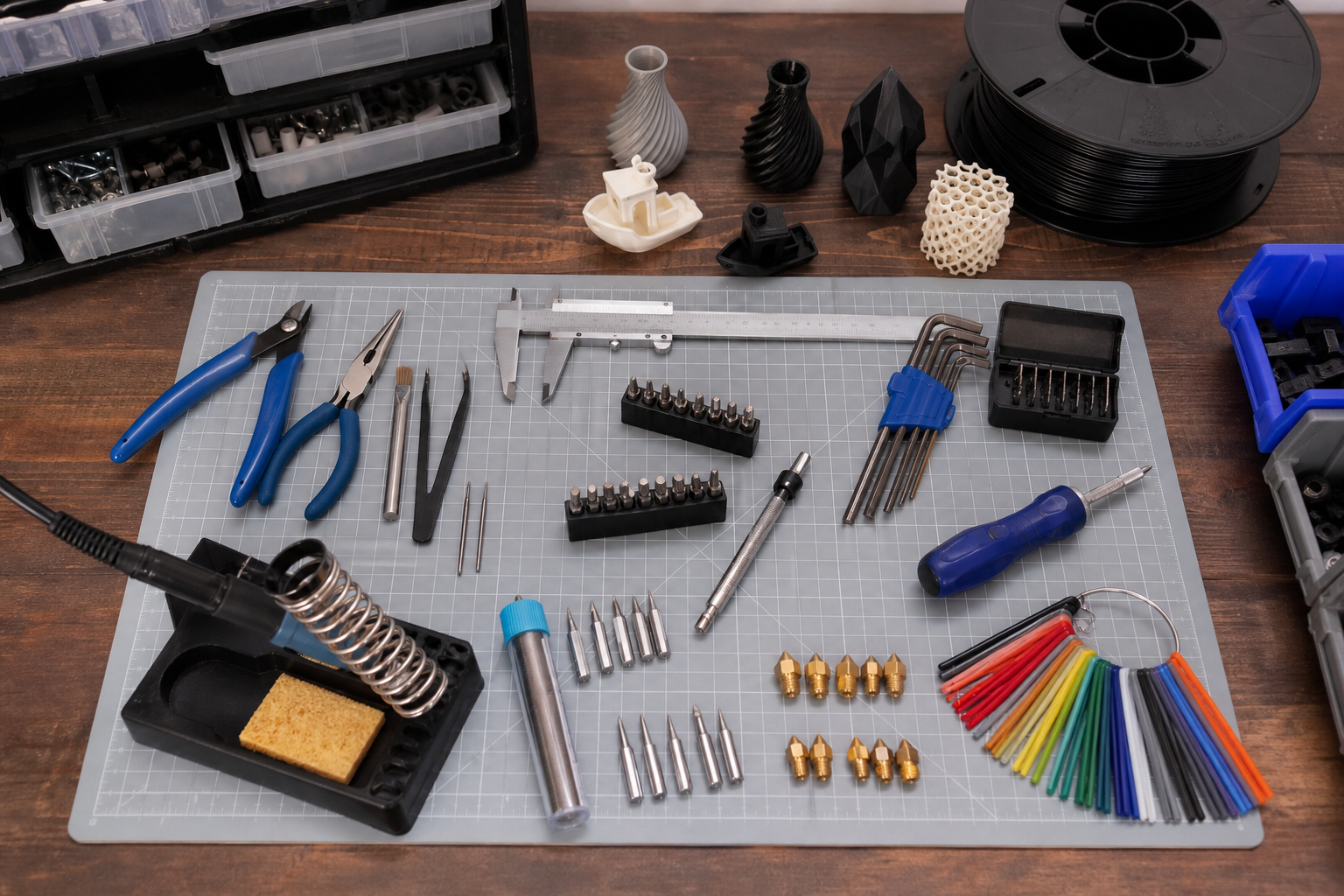
- Choose filament by material behavior: PLA for easy printing, PETG for tougher utility parts, and higher-temperature materials only when your printer supports them.
- Choose calipers with a solid body, smooth slide, reliable zeroing, and clear metric and imperial switching if needed.
- Choose organizers by bench layout: wall bins for visibility, drawers for dust control, and portable cases for mobile work.
- Treat accessory bundles as useful only when they include consumables you would actually buy separately.
Buy for Maintenance and Longevity
The better long-term purchase is often the tool that is easier to maintain, not the one with the most features. Before buying, check whether replacement tips, bits, nozzles, trays, belts, and batteries are easy to identify and source.
- Prefer products with clear manuals, standard part sizes, and straightforward adjustment points.
- Consider noise, heat, dust, and ventilation needs against the space where you will actually work.
- Build a kit gradually: core tool first, then the accessories and consumables your projects prove you need.
- Compare return windows and warranty terms with the same care as headline specifications.
Frequently asked questions
What should I compare first?
Neutral buyer criteria for comparing rotary tools, soldering stations, 3D printer filament, calipers, and tool organizers around real workshop needs. Start with use frequency, dimensions, warranty, replacement parts, recent reviews, and the return policy before chasing the lowest price.
Should I check Amazon, Coupang, or AliExpress first?
Use Amazon and Coupang for fast delivery categories, then compare AliExpress for low-cost accessories, parts, and bundles.
Where should I confirm price and availability?
Prices, coupons, shipping times, and stock change often, so confirm the final details on the merchant page before buying.