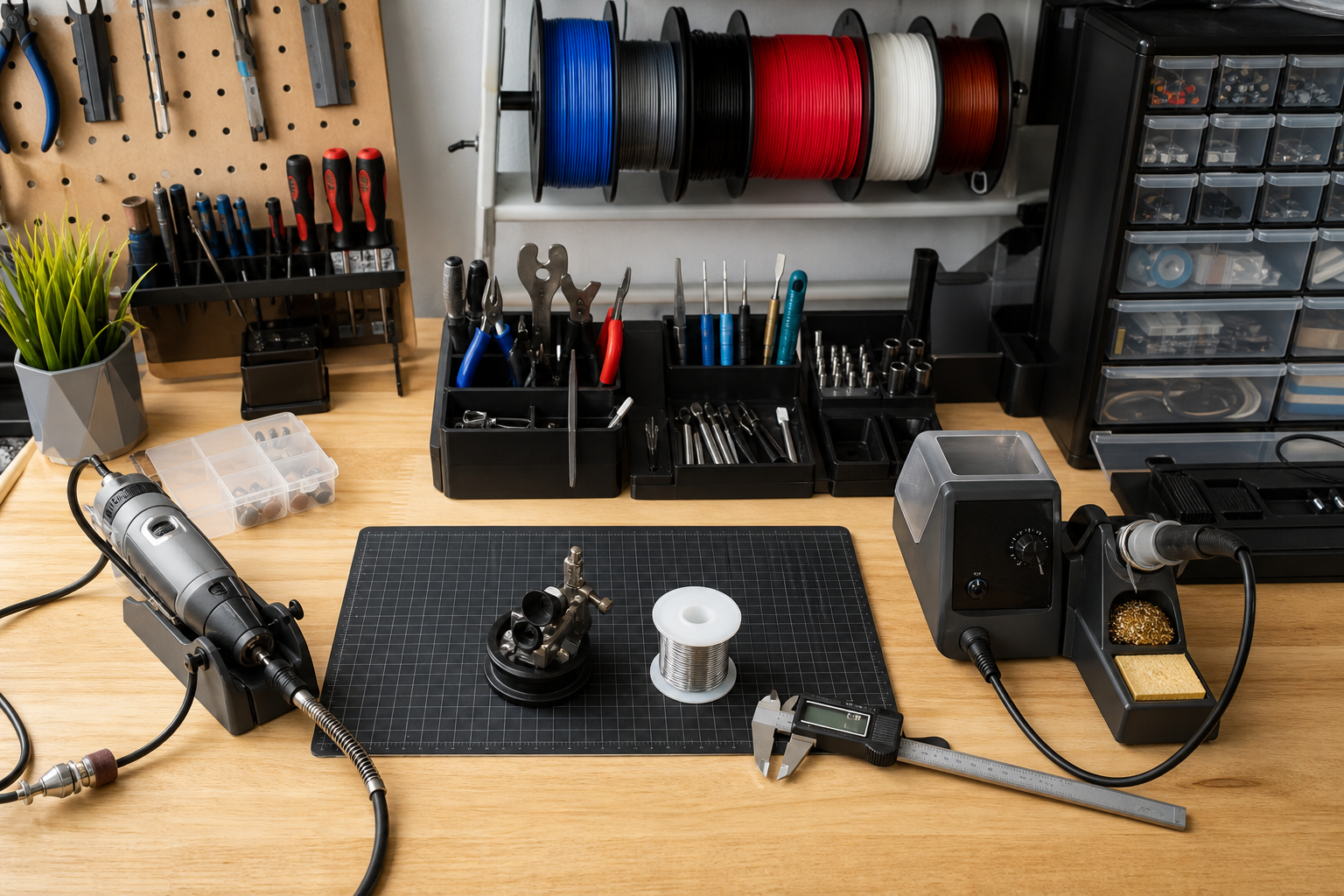
Start With the Work You Actually Do
Before buying, separate tools by the jobs you repeat most often. A rotary tool is useful for cutting, sanding, engraving, and deburring. A soldering station matters most when electronics work needs stable heat control. 3D printer filament should match both the printer specification and the finished part’s purpose.
- Compare rotary tools by speed control, collet compatibility, grip comfort, and included accessories.
- For soldering stations, check temperature stability, tip availability, stand design, and cable flexibility.
- For filament, confirm diameter, material type, storage needs, and the printer’s recommended temperature range.
- For calipers, look for easy zeroing, readable display, smooth jaws, and repeatable measurements.
Compare Control, Accuracy, and Daily Feel
The best choice is not always the most powerful or feature-heavy option. For maker work, control and repeatability often matter more. Weight balance, noise, bit changes, handle shape, and cable drag can affect precision during longer sessions.
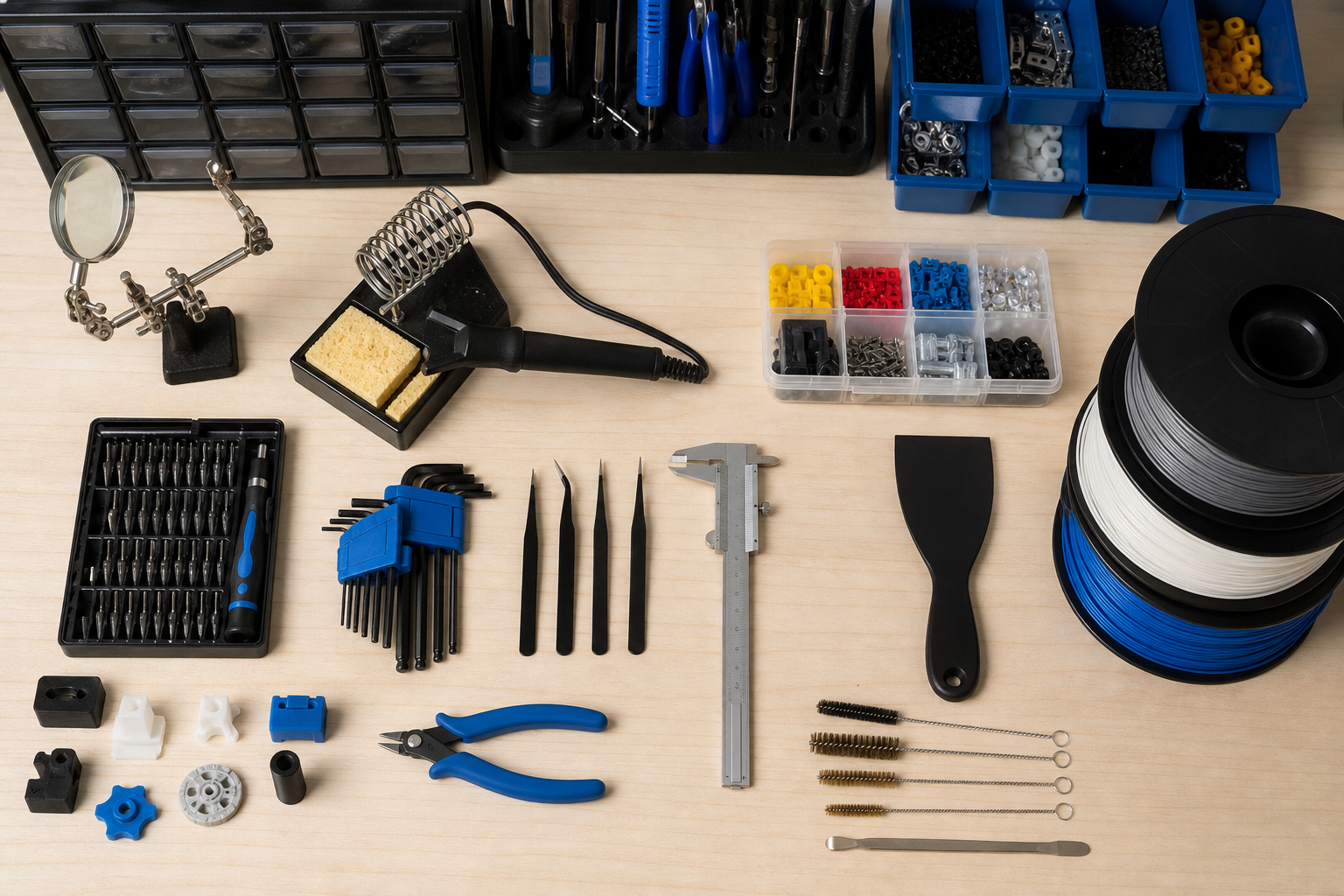
- Choose lighter rotary tools with fine speed control for small parts and delicate materials.
- Prioritize heat recovery and interchangeable tips over headline wattage alone for soldering.
- Judge filament by dimensional consistency, winding quality, moisture handling, and material fit.
- For calipers, compare metal construction, locking screw feel, battery access, and case quality.
Check the Buying Details Before You Commit
Use stores, specialist tool shops, and online marketplaces as neutral places to verify price, delivery time, return policy, and availability. Also compare what is included in the box, because kits with similar names can differ in bits, tips, plugs, cases, or warranty terms. Good storage is part of the purchase decision, not an afterthought.
- Pick tool organizers by drawer depth, divider flexibility, visibility, and bench or wall fit.
- Confirm that soldering tips, cleaning supplies, and spare parts remain easy to find.
- For filament, consider sealed packaging and a dry storage plan before buying in bulk.
- Keep frequently used tools visible, and store hot, sharp, or delicate items separately.
Frequently asked questions
What should I compare first?
A neutral, practical guide to comparing core DIY and maker tools by task fit, control, material compatibility, accuracy, and storage needs. Start with use frequency, dimensions, warranty, replacement parts, recent reviews, and the return policy before chasing the lowest price.
Should I check Amazon, Coupang, or AliExpress first?
Use Amazon and Coupang for fast delivery categories, then compare AliExpress for low-cost accessories, parts, and bundles.
Where should I confirm price and availability?
Prices, coupons, shipping times, and stock change often, so confirm the final details on the merchant page before buying.