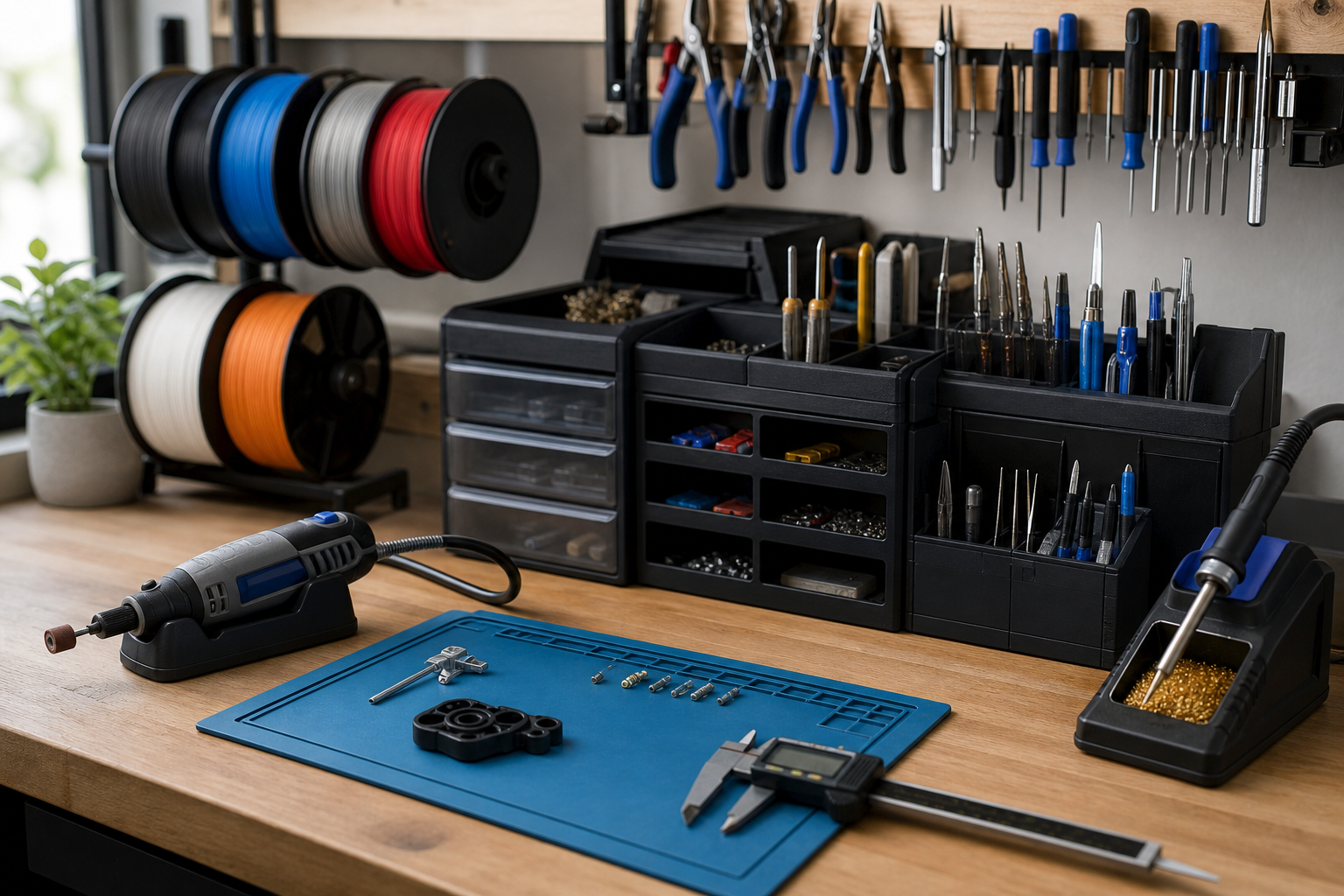
Start with the work you actually do
Choose maker tools around the materials and repairs you handle most often. Plastic trimming, wood shaping, electronics repair, and 3D print finishing all call for different power levels, precision, and accessories.
For a rotary tool, compare speed control, grip comfort, bit compatibility, and collet options. For a soldering station, look at temperature control, tip availability, stand stability, and cable flexibility. Use stores as neutral checkpoints for price, delivery, returns, and stock.
- Light hobby work usually benefits from a compact tool and a focused bit set.
- Electronics work rewards stable temperature control and readily available tips.
- Frequent use makes replacement parts and consumables more important.
- A smaller kit with useful accessories can beat a large kit full of rarely used parts.
Match precision tools and materials
3D printer filament should match your printer’s nozzle temperature, bed temperature, spool holder, and storage setup. PLA is often straightforward to print, while PETG, ABS-style materials, and flexible filaments may need more tuning and workspace planning.
For calipers, compare repeatability, readable markings, smooth jaw movement, zeroing, battery access, and case quality. A clear display matters, but consistent measurements matter more than extra buttons.
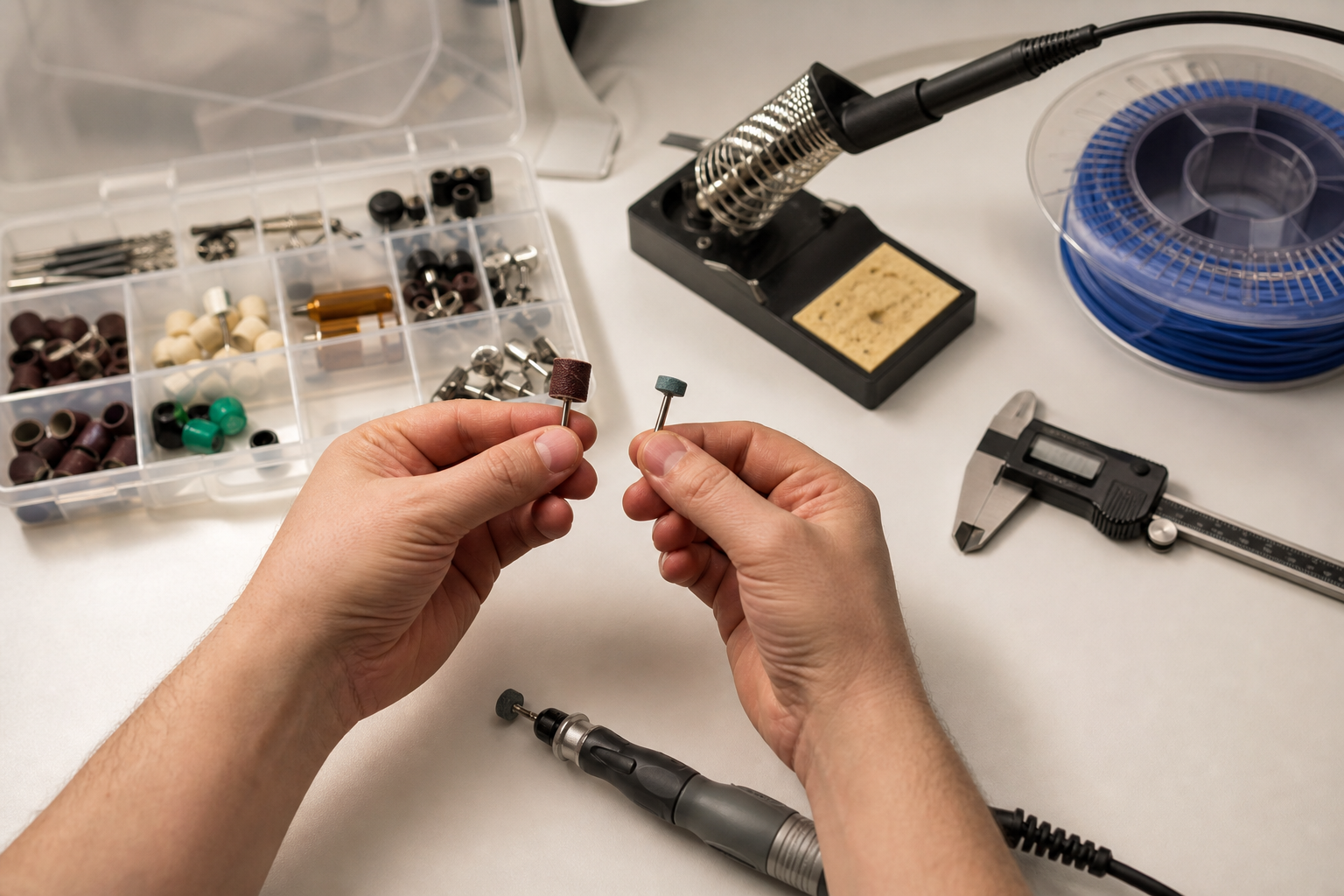
- Confirm filament diameter, spool size, and recommended print temperature.
- Plan dry storage for materials that absorb moisture.
- For calipers, compare metal construction, smooth slide action, and a secure lock screw.
- Keep measuring tools in a case to reduce dust, impact, and bench damage.
Buy for organization and long-term use
Tool organizers are not just storage. They determine whether bits, soldering tips, nozzles, fasteners, and calibration tools are easy to find during a project. Choose drawers, bins, trays, or wall storage based on your workflow, not just capacity.
For long-term value, favor tools that feel controlled in hand, have accessible consumables, and are easy to clean and store. Before buying, check several retailers or manufacturer pages for availability, return policy, delivery timing, and compatible accessories.
- Keep frequently used tools within reach and less-used accessories in labeled zones.
- Use divided trays for rotary bits, soldering tips, nozzles, and small fasteners.
- Choose organizers that can expand as your tool collection grows.
- Avoid buying around a temporary deal if the tool does not fit your projects.
Frequently asked questions
What should I compare first?
A practical guide to choosing rotary tools, soldering stations, 3D printer filament, calipers, and tool organizers without relying on temporary deals or rankings. Start with use frequency, dimensions, warranty, replacement parts, recent reviews, and the return policy before chasing the lowest price.
Should I check Amazon, Coupang, or AliExpress first?
Use Amazon and Coupang for fast delivery categories, then compare AliExpress for low-cost accessories, parts, and bundles.
Where should I confirm price and availability?
Prices, coupons, shipping times, and stock change often, so confirm the final details on the merchant page before buying.