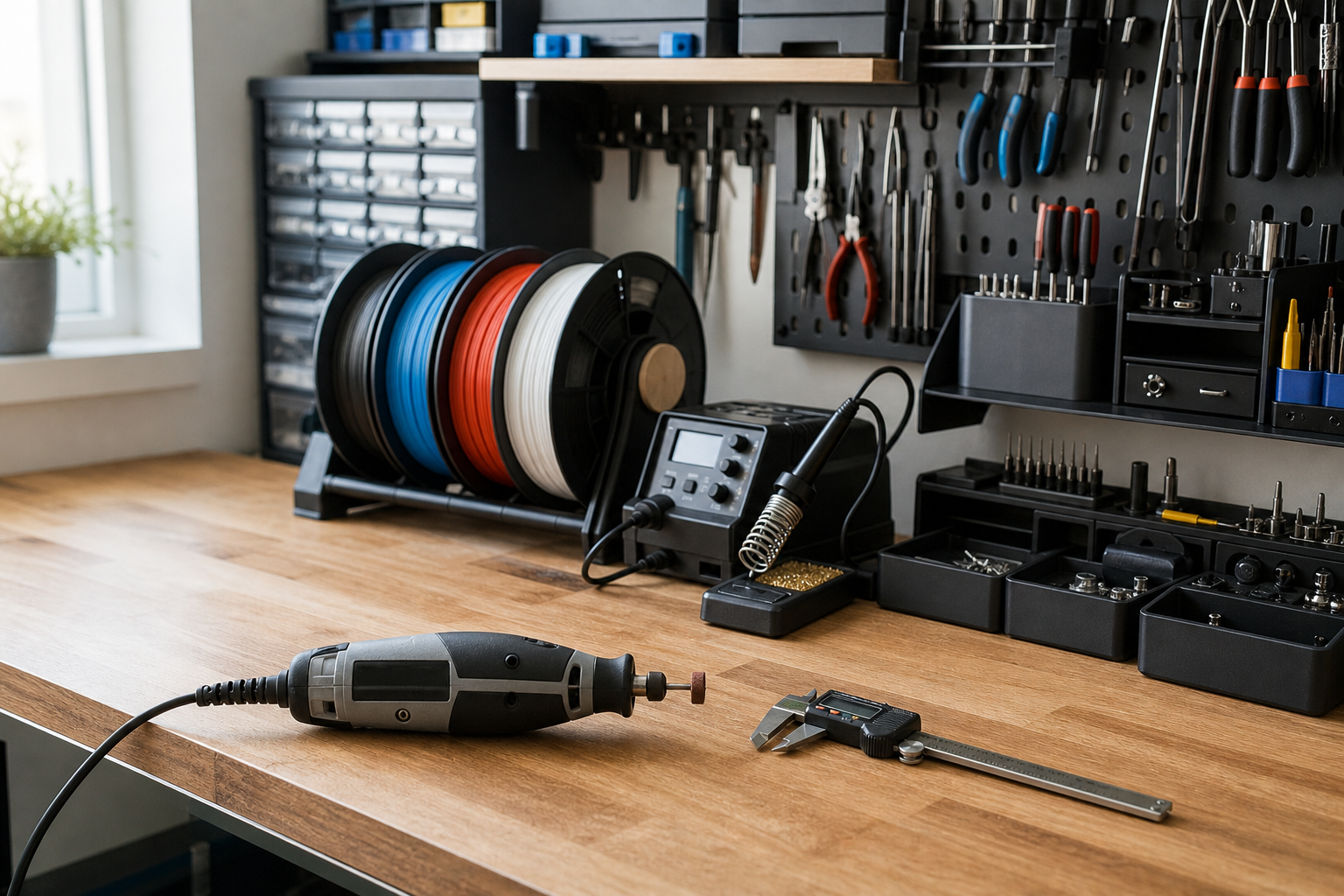
Start With Your Actual Projects
Before comparing specs, define the work you do most often. A rotary tool should be judged by cutting, grinding, engraving, and accessory needs, while a soldering station should match component size, session length, and tip requirements.
For 3D printer filament, check material compatibility with your nozzle temperature, bed temperature, and storage conditions. Calipers and tool organizers may look simple, but they affect accuracy and workflow every time you use the bench.
- Rotary tools: compare variable speed, vibration, collet size, and accessory compatibility
- Soldering stations: check temperature stability, tip availability, warm-up time, and stand design
- Filament: compare material, diameter tolerance, moisture protection, and spool winding
- Calipers: look for repeatability, display readability, battery type, and jaw finish
Compare Everyday Usability
More power or a larger accessory kit is not automatically better. A rotary tool that feels balanced and controllable can be more useful than one with unused extras, and a soldering station should be easy to adjust without interrupting the job.
For organizers, capacity matters less than retrieval speed. Drawer units, divided bins, wall panels, and portable boxes all work best in different spaces, so choose around your bench layout and the tools you actually reach for.
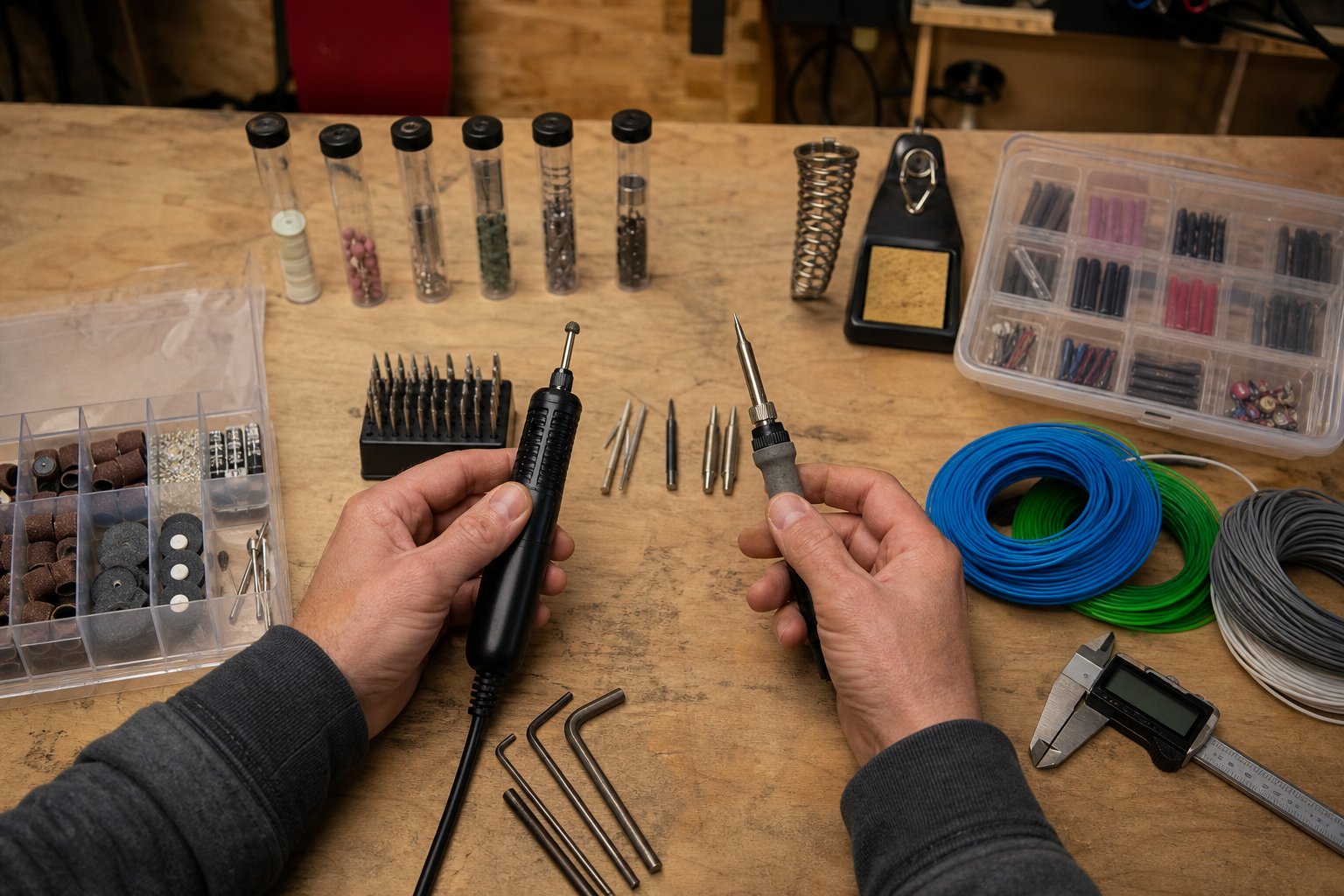
- Prefer layouts that make frequently used parts visible
- Check whether consumables and replacement parts are easy to find later
- Evaluate cable length, stand stability, handle thickness, and daily comfort
- Read reviews that match your use case rather than only average ratings
Final Checks Before Buying
Use stores as neutral places to verify price, delivery, return policy, and availability. Product names can be similar while kits, plug types, warranty terms, and included accessories differ.
If you are building a maker setup from scratch, start with dependable basics and a clear storage system before chasing specialized upgrades. Add soldering tips, rotary bits, filament types, and measuring tools as your projects demand them.
- Include consumables, cases, spare tips, and bits in the total cost
- Confirm local power requirements and relevant certification markings
- Check the return window and process for early defects
- Measure your bench and storage space before choosing large organizers
Frequently asked questions
What should I compare first?
A practical guide to comparing rotary tools, soldering stations, 3D printer filament, calipers, and tool organizers without relying on hype or short-term deals. Start with use frequency, dimensions, warranty, replacement parts, recent reviews, and the return policy before chasing the lowest price.
Should I check Amazon, Coupang, or AliExpress first?
Use Amazon and Coupang for fast delivery categories, then compare AliExpress for low-cost accessories, parts, and bundles.
Where should I confirm price and availability?
Prices, coupons, shipping times, and stock change often, so confirm the final details on the merchant page before buying.