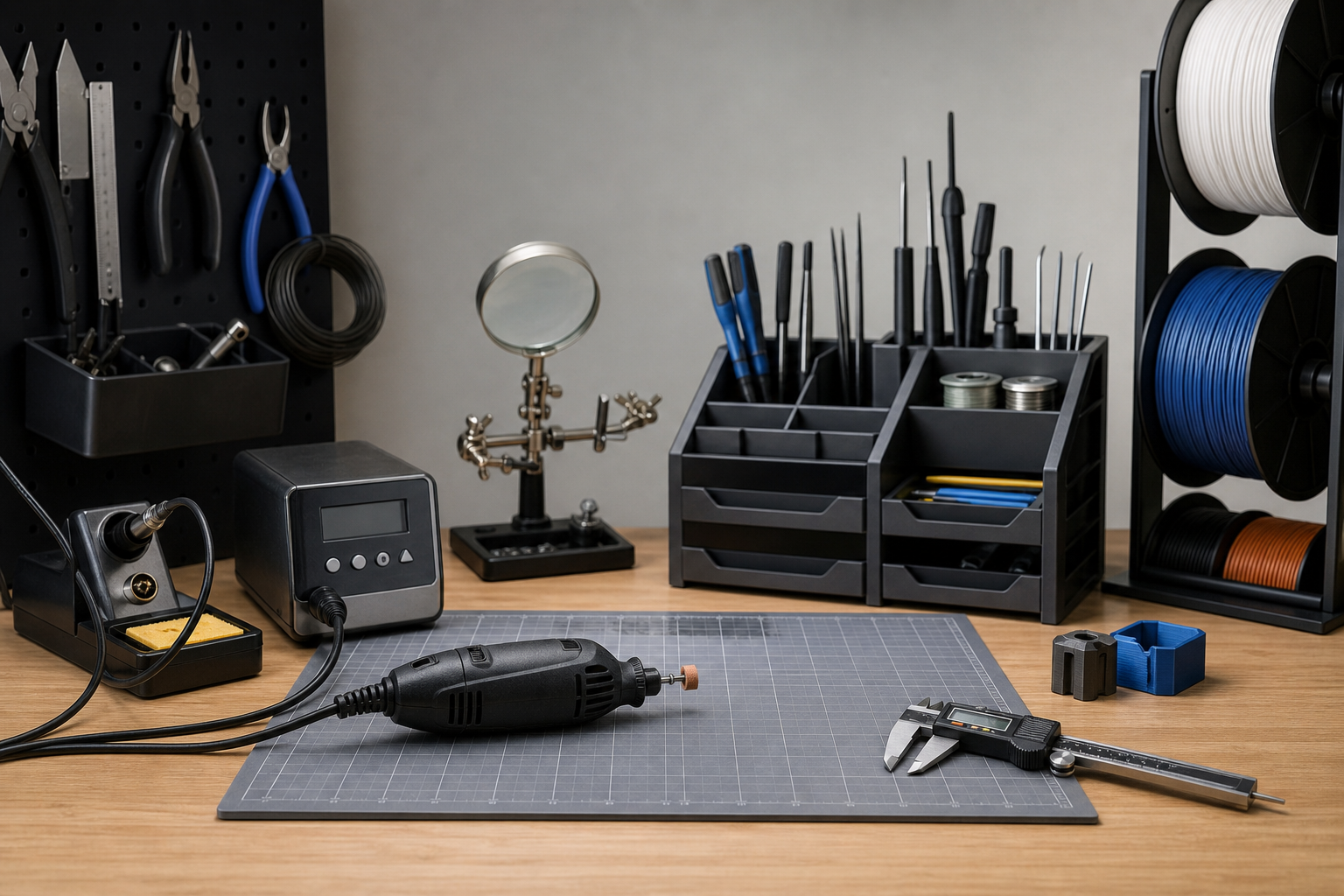
Start With the Work You Actually Do
The right tool is the one that fits your recurring projects, not simply the one with the longest feature list. List whether you most often cut, grind, carve, solder, finish 3D prints, measure parts, or organize small hardware.
For rotary tools, focus on accessory compatibility. For soldering stations, compare temperature control and tip availability. For filament, consider material behavior and storage. For calipers, prioritize readability and repeatable measurement.
- Match the tool to the materials you use most: wood, plastic, metal, resin, or electronics.
- Check availability of bits, tips, nozzles, batteries, and replacement parts.
- Beginners usually benefit from clear controls and a wide but manageable speed or temperature range.
- Choose organizers with room for the tools and consumables you expect to add later.
Criteria Worth Comparing
Look beyond headline power ratings and feature names. Weight, cable flexibility, stand stability, display clarity, drawer depth, and storage layout often matter more during regular workshop use.
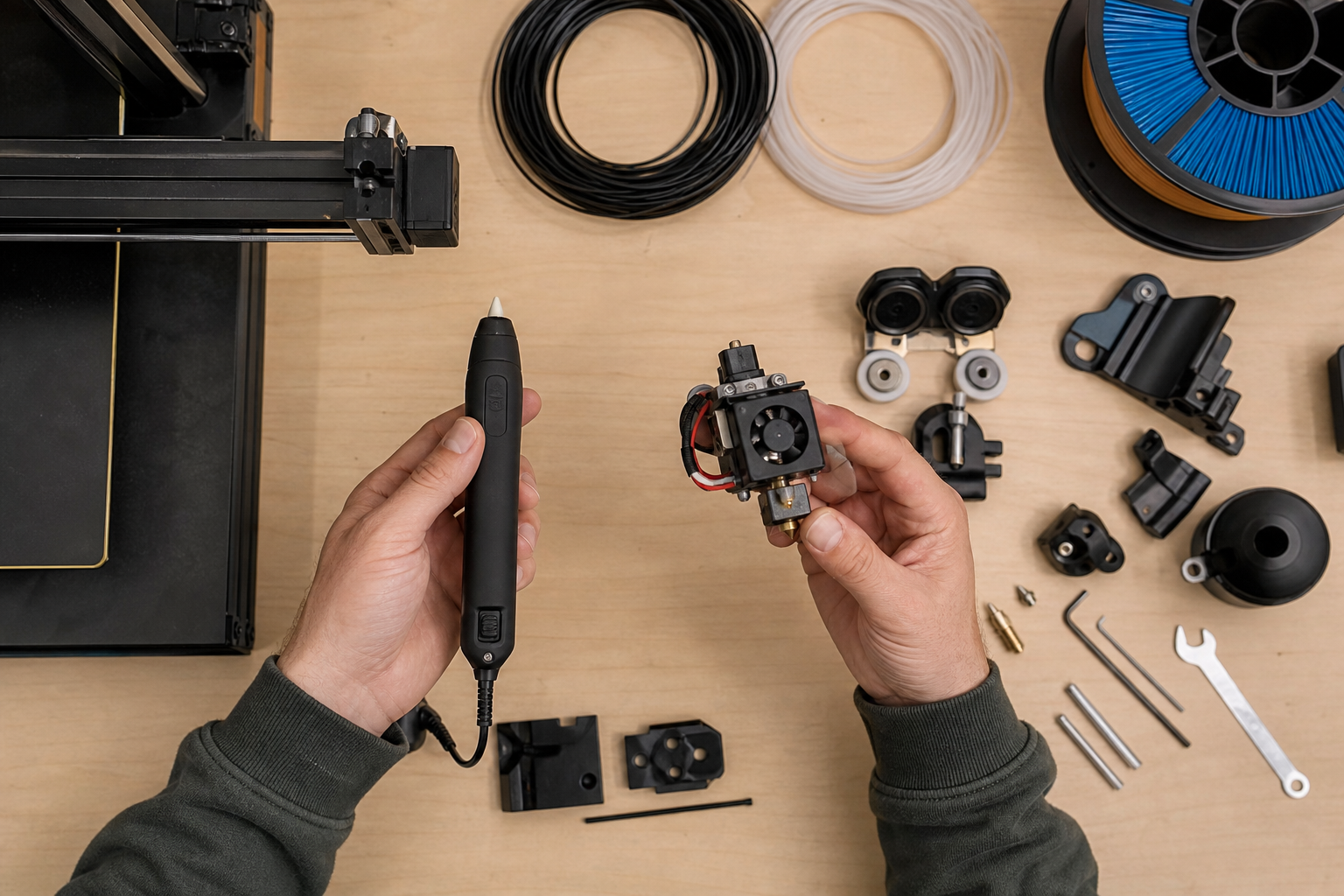
- Rotary tools: speed range, collet size, vibration, grip shape, and included accessories.
- Soldering stations: heat-up behavior, temperature stability, tip ecosystem, and holder design.
- 3D printer filament: diameter tolerance, material type, moisture handling, and printer temperature compatibility.
- Calipers: metal body, zeroing behavior, display readability, battery access, and case quality.
- Tool organizers: drawer depth, adjustable dividers, wall mounting, visibility, and labeling options.
Check Before Buying
Before ordering, compare practical details rather than relying on promotional language. Use hardware stores, maker shops, manufacturer pages, and online retailers as neutral places to verify price, delivery timing, return policy, and availability.
- Start with a focused kit instead of buying a large bundle of accessories you may not use.
- For filament, material, storage condition, and printer compatibility matter more than color alone.
- For measuring tools, make sure storage and handling protect the jaws and display.
- For organizers, measure your bench, shelves, and common movement paths before choosing a format.
Frequently asked questions
What should I compare first?
A concise guide to choosing rotary tools, soldering stations, 3D printer filament, calipers, and tool organizers using practical buyer criteria. Start with use frequency, dimensions, warranty, replacement parts, recent reviews, and the return policy before chasing the lowest price.
Should I check Amazon, Coupang, or AliExpress first?
Use Amazon and Coupang for fast delivery categories, then compare AliExpress for low-cost accessories, parts, and bundles.
Where should I confirm price and availability?
Prices, coupons, shipping times, and stock change often, so confirm the final details on the merchant page before buying.