Choose Core Tools Around Real Projects
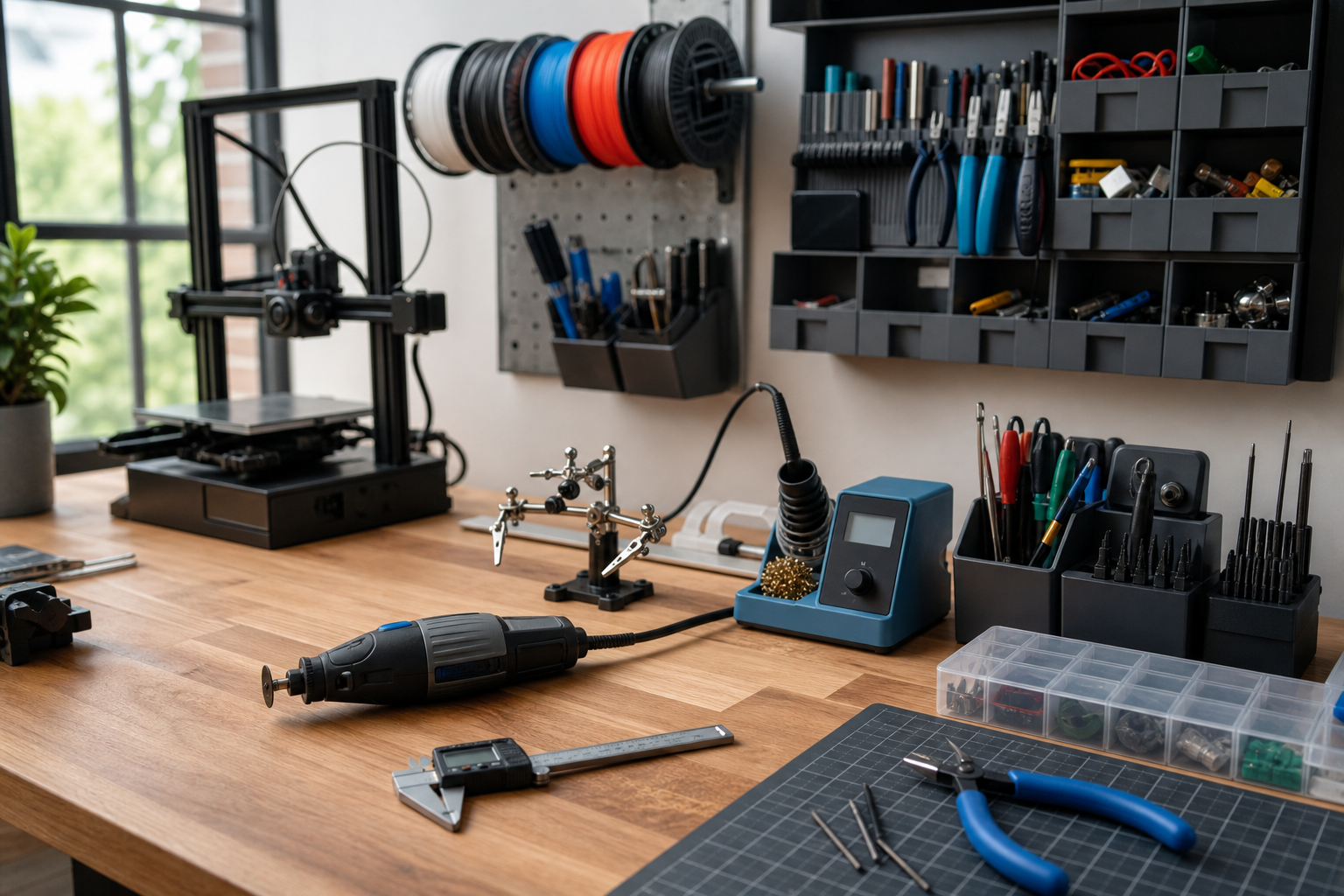
The most useful buying order starts with what you actually make, not with a brand list or a short-term deal. If you cut, grind, polish, or drill small parts, compare variable-speed rotary tools and accessory compatibility first; if electronics work is central, prioritize a soldering station with steady temperature control.
For precise assembly and 3D printer tuning, calipers can affect the quality of almost every measurement. Look for a clear display, easy zeroing, smooth jaws, and simple battery replacement.
- For rotary tools, check speed range, collet compatibility, and availability of replacement bits.
- For soldering stations, compare temperature stability, tip selection, stand design, and cleaning options.
- For calipers, compare measuring range, repeatability, jaw smoothness, and display readability.
- Beginners often benefit more from replaceable common accessories than from oversized starter kits.
Compare Consumables and Workspace Setup
3D printer filament should match your printer, nozzle, bed surface, and workflow. Do not stop at material names like PLA, PETG, or ABS; also check recommended print temperatures, spool size, storage condition, and whether the color or material is easy to buy again.
Tool organizers are not just storage. Modular boxes, wall panels, drawers, and portable cases each suit different spaces, so choose based on bench size, how often you move tools, and how quickly you need to find small parts.
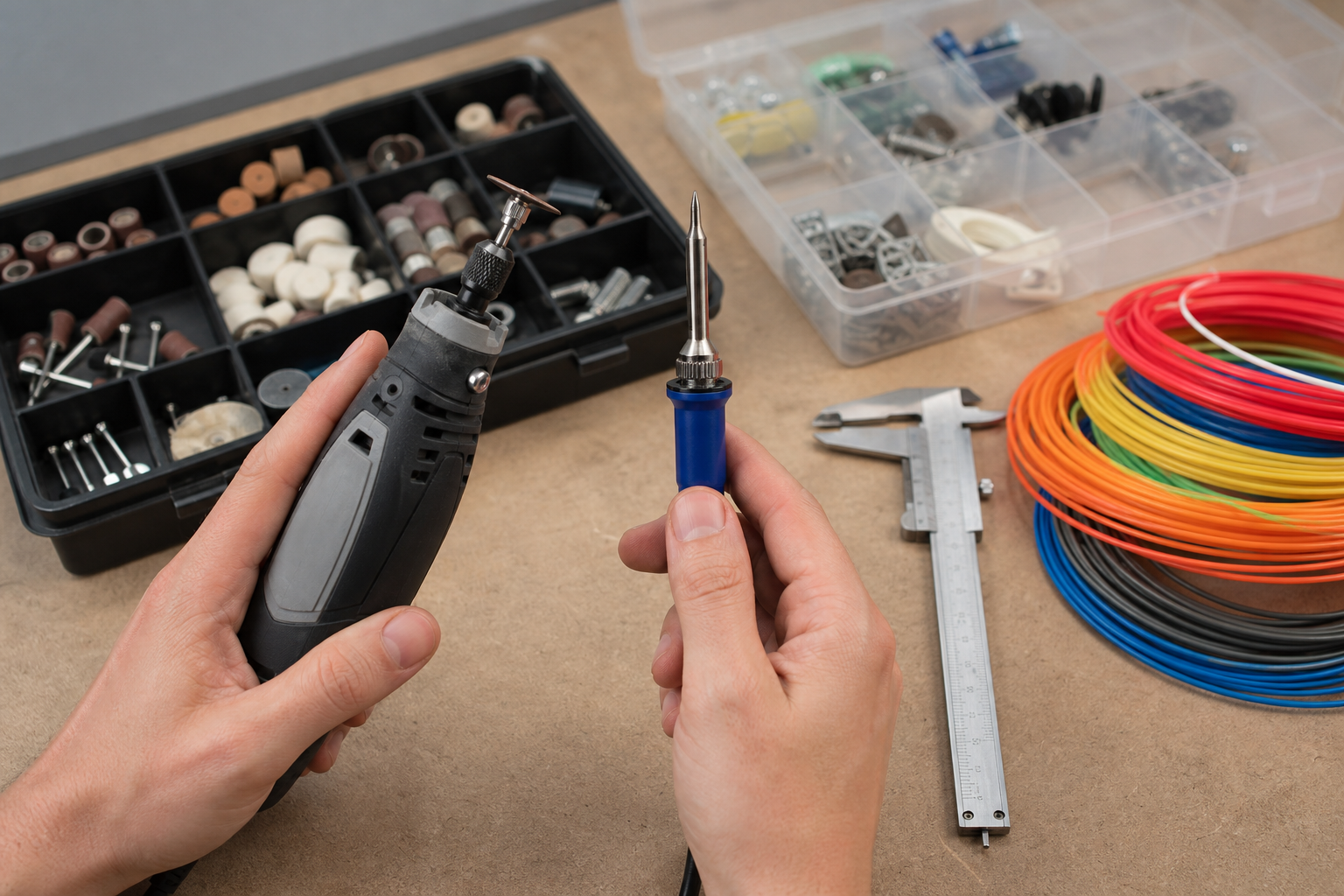
- Match filament temperature ranges against your printer’s hotend and bed limits.
- If you print moisture-sensitive materials, consider sealed or dry storage options.
- For organizers, check adjustable dividers, labeling space, stacking stability, and handle durability.
- Keep frequently used tools visible and reachable instead of buried in closed storage.
Final Checks Before Buying
Before choosing, use stores and online marketplaces as neutral places to verify price, delivery time, return policy, and availability. The same model can vary by included accessories, plug type, warranty terms, or regional packaging.
Reviews are most useful when you look for repeated patterns rather than isolated praise. Pay attention to comments about vibration, noise, tip changes, filament tangles, measurement drift, drawer fit, and hinge quality.
- Confirm that the model number matches the product photos and included parts list.
- For consumables, consider reorder availability and storage needs, not only unit price.
- For powered tools, check whether replacement parts and accessories are easy to source.
- Use retailer pages to verify logistics and policies, not as the only basis for quality claims.
Frequently asked questions
What should I compare first?
A practical guide to comparing rotary tools, soldering stations, 3D printer filament, calipers, and tool organizers without relying on short-lived deals. Start with use frequency, dimensions, warranty, replacement parts, recent reviews, and the return policy before chasing the lowest price.
Should I check Amazon, Coupang, or AliExpress first?
Use Amazon and Coupang for fast delivery categories, then compare AliExpress for low-cost accessories, parts, and bundles.
Where should I confirm price and availability?
Prices, coupons, shipping times, and stock change often, so confirm the final details on the merchant page before buying.