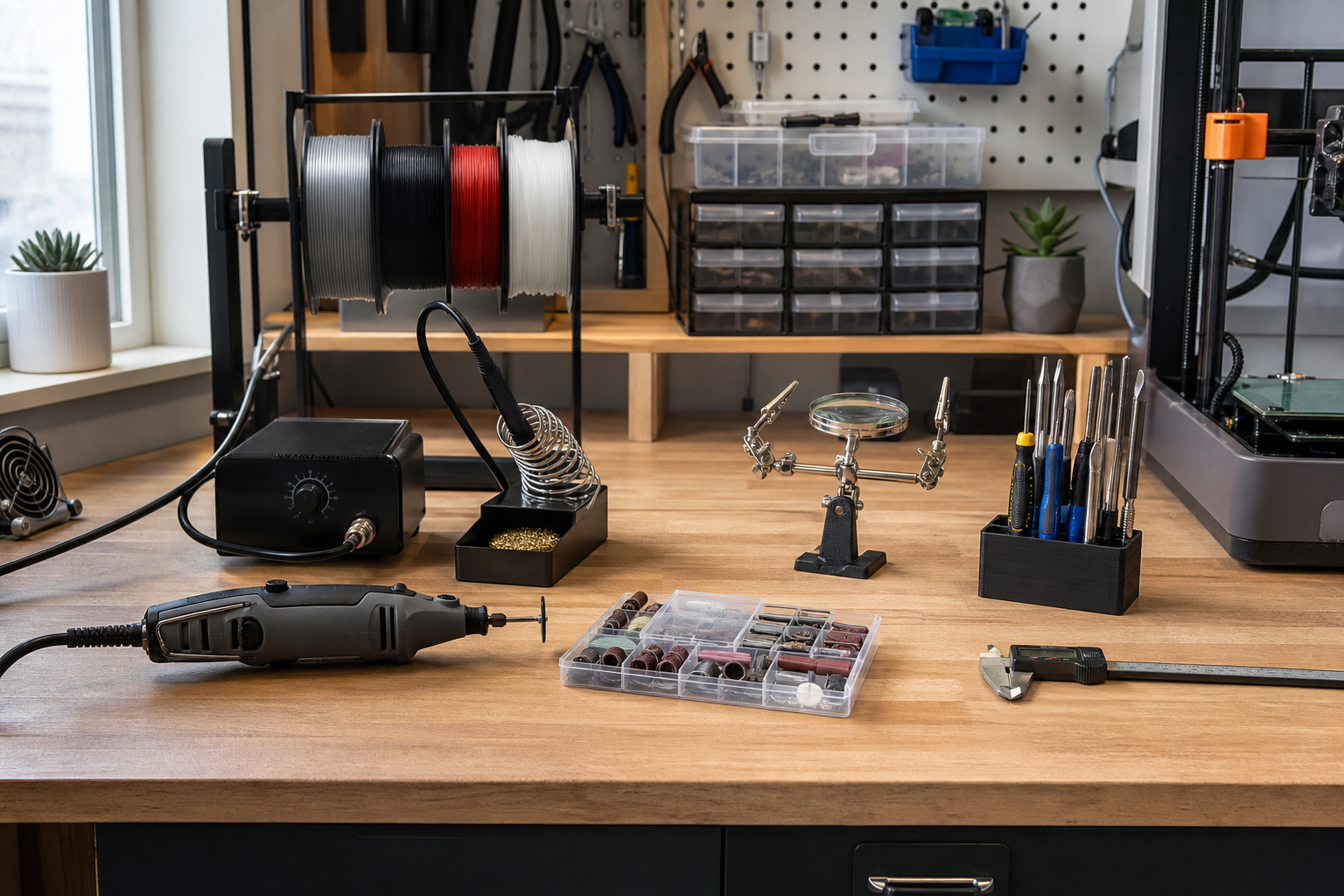
Start With the Work You Actually Do
The best tool is not always the most expensive one; it is the one that fits repeatable jobs. List the materials and tasks you handle, such as trimming wood, cutting plastic, soldering small boards, measuring printed parts, or cleaning up 3D prints, before comparing products.
- For rotary tools, compare speed range, grip comfort, vibration, and bit compatibility.
- For soldering stations, check temperature stability, tip availability, stand design, and cord flexibility.
- For filament, compare material type, diameter tolerance, storage condition, and printer compatibility.
- For calipers, look at repeatability, display readability, jaw alignment, and battery access.
Compare Everyday Use, Not Just Specs
Spec sheets matter, but small workshop details often decide whether a tool stays useful. Heat, noise, cable routing, consumable availability, and storage footprint are all practical buying criteria for a maker bench.
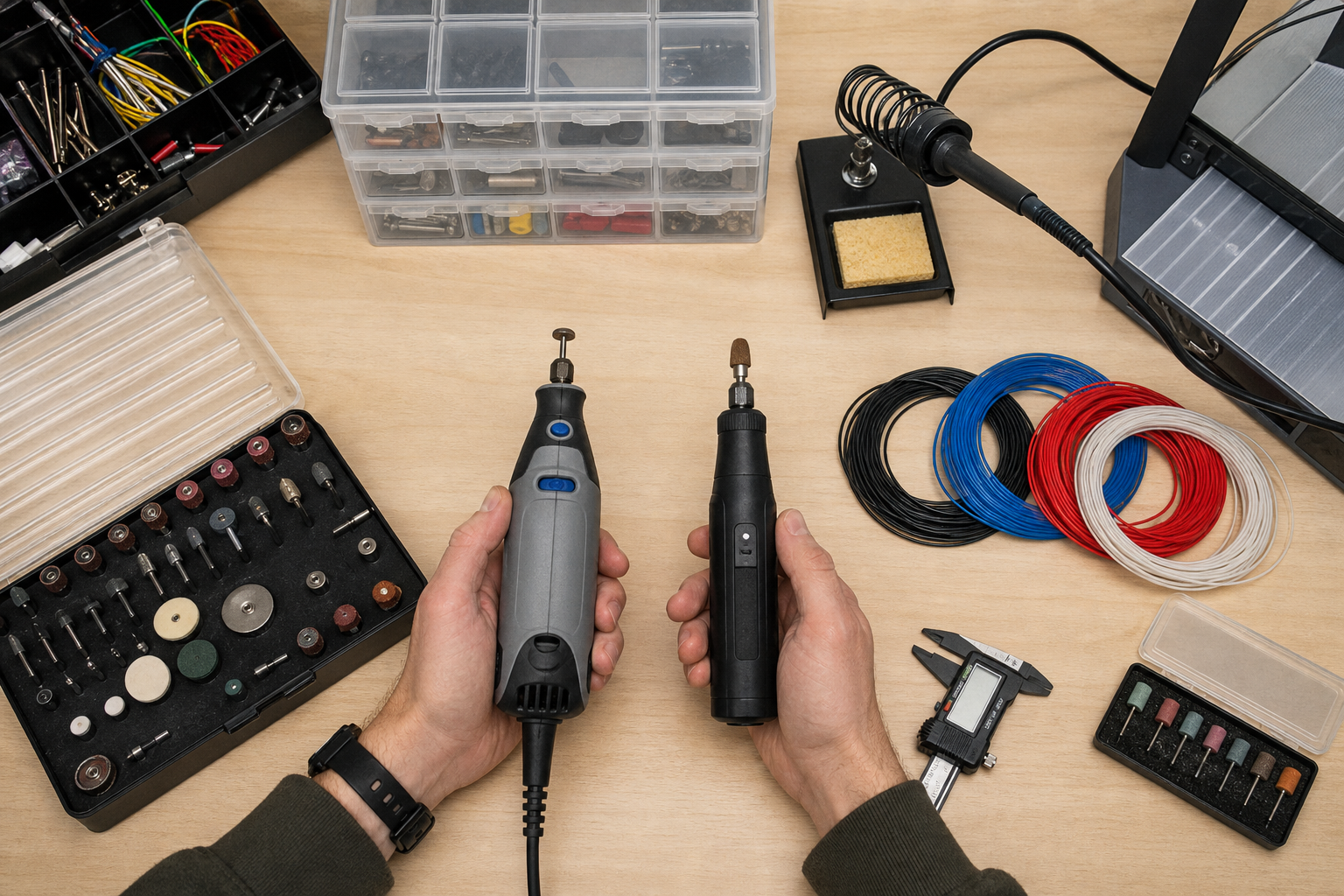
- Choose accessory kits based on the bits and tips you will use often, not the largest item count.
- For electronics work, a stable soldering station with replaceable tips is usually more useful than a basic iron alone.
- For 3D printing, filament consistency and dry storage can matter more than color variety.
- For organizers, compare drawer depth, divider layout, labeling options, and whether tools can be reached one-handed.
Check the Purchase Details
Use stores and marketplaces as neutral places to verify price, delivery time, return policy, warranty terms, and availability. Bring a requirements list rather than chasing a temporary promotion or a single product claim.
- Confirm that replacement bits, soldering tips, nozzles, batteries, or blades are easy to source.
- Measure your bench and storage area before buying bulky organizers or stations.
- Read the manual, return window, and warranty coverage before committing.
- Build around core tools first, then add specialized accessories when a project actually needs them.
Frequently asked questions
What should I compare first?
A practical guide to choosing rotary tools, soldering stations, 3D printer filament, calipers, and tool organizers without relying on hype or temporary deals. Start with use frequency, dimensions, warranty, replacement parts, recent reviews, and the return policy before chasing the lowest price.
Should I check Amazon, Coupang, or AliExpress first?
Use Amazon and Coupang for fast delivery categories, then compare AliExpress for low-cost accessories, parts, and bundles.
Where should I confirm price and availability?
Prices, coupons, shipping times, and stock change often, so confirm the final details on the merchant page before buying.