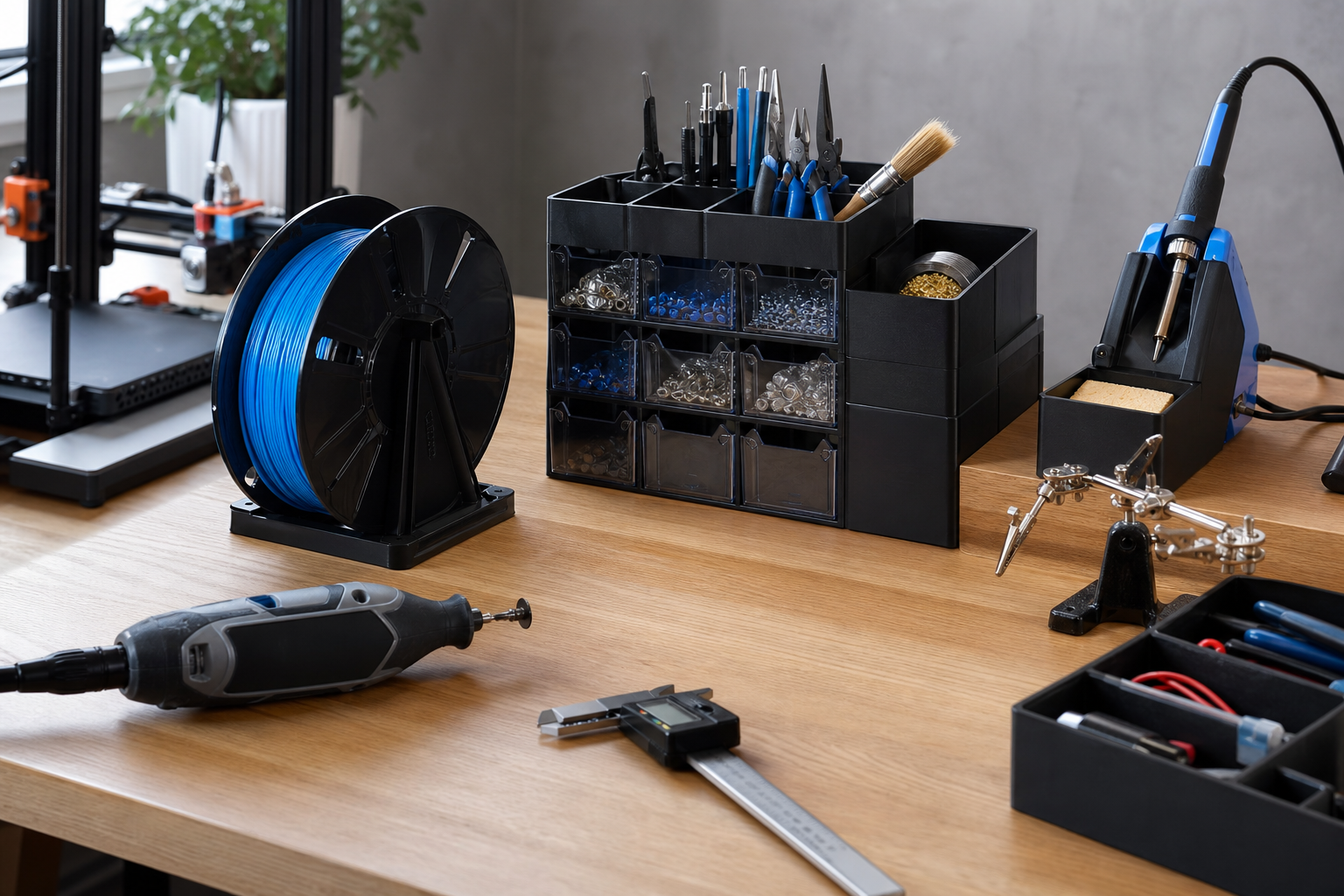
Start with the work you actually do
Before comparing models, define the jobs your bench needs to handle. Rotary tools suit shaping, trimming, sanding, and light cleanup. A temperature-controlled soldering station matters more for electronics, cable repairs, and kit building. If 3D printing is part of the workflow, filament consistency and accurate measuring tools become just as important as the printer itself.
- For rotary tools, compare speed control, bit compatibility, grip comfort, and vibration.
- For soldering stations, check temperature stability, tip availability, stand design, and cable flexibility.
- For filament, match diameter, material type, spool fit, and storage requirements to your printer.
- For calipers, look for repeatable readings, readable displays, smooth jaws, and easy battery access.
Prioritize compatibility and upkeep
The most impressive specification sheet is not always the best purchase. Tools that accept common accessories, have replaceable wear parts, and fit your existing bench are usually easier to live with. Before buying, check whether rotary bits, soldering tips, filament sizes, and organizer inserts are easy to source.
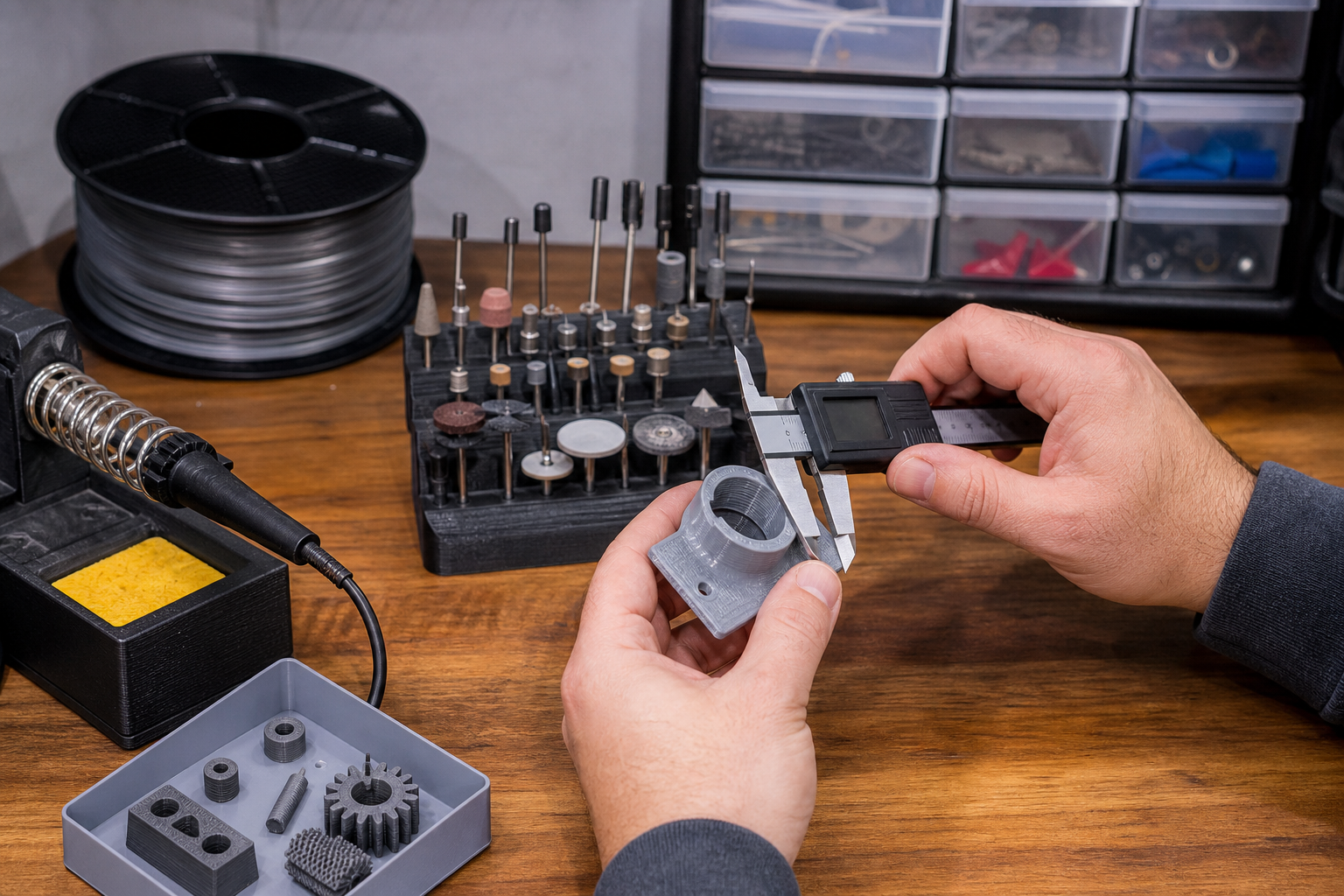
- Prefer standard accessory systems when they meet your needs.
- Read manuals or parts lists to understand what can be replaced later.
- Compare organizers by drawer depth, divider flexibility, dust control, and labeling space.
- Use stores, marketplaces, and local suppliers only to verify price, delivery, return policy, and availability.
Build a balanced bench
A strong maker setup is about workflow, not just individual tools. Keep frequent-use items close, store filament and electronic parts away from moisture and dust, and avoid buying overlapping tools unless they solve different tasks. This keeps the bench useful without turning it into clutter.
- Beginners can start with a versatile rotary tool, a basic temperature-controlled soldering station, dependable PLA filament, and a simple organizer.
- Precision-focused users should give more budget weight to calipers, small-parts storage, and stable soldering accessories.
- Track consumables such as bits, tips, nozzles, batteries, and filament so replacements are planned rather than urgent.
Frequently asked questions
What should I compare first?
A practical, neutral guide to choosing rotary tools, soldering stations, 3D printer filament, calipers, and tool organizers for a reliable maker workspace. Start with use frequency, dimensions, warranty, replacement parts, recent reviews, and the return policy before chasing the lowest price.
Should I check Amazon, Coupang, or AliExpress first?
Use Amazon and Coupang for fast delivery categories, then compare AliExpress for low-cost accessories, parts, and bundles.
Where should I confirm price and availability?
Prices, coupons, shipping times, and stock change often, so confirm the final details on the merchant page before buying.