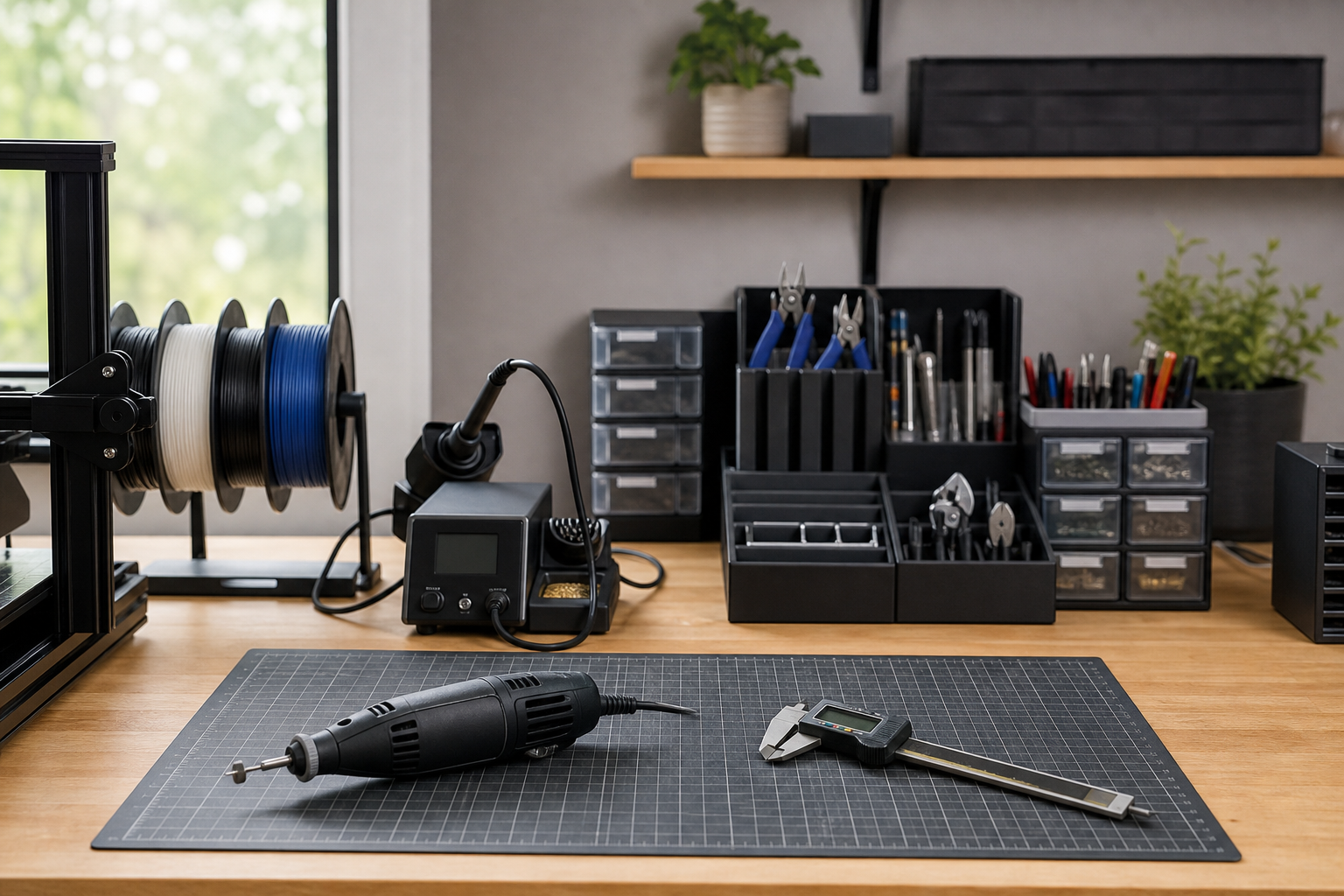
Start With the Work, Then Match the Tool
Buy for the jobs you actually do, not for the biggest bundle. Wood shaping, PCB repair, printed-part cleanup, and measurement all point to different needs for rotary tool control, soldering heat stability, filament choice, caliper accuracy, and storage layout.
- Choose corded or bench tools for long sessions; choose cordless mainly when mobility matters.
- For rotary tools, compare variable speed, vibration, collet sizes, and accessory shank compatibility.
- For soldering stations, look at temperature stability, replaceable tips, a safe stand, and ESD-aware design for electronics.
- Use stores as neutral places to verify price, delivery, return policy, warranty, and availability.
Compare Specs That Affect Daily Use
Useful specs are the ones that improve control, repeatability, and maintenance. A high maximum RPM, bright display, or large kit count matters less than stable low-speed control, quick heat recovery, filament consistency, smooth caliper jaws, and organizers that keep tools visible.
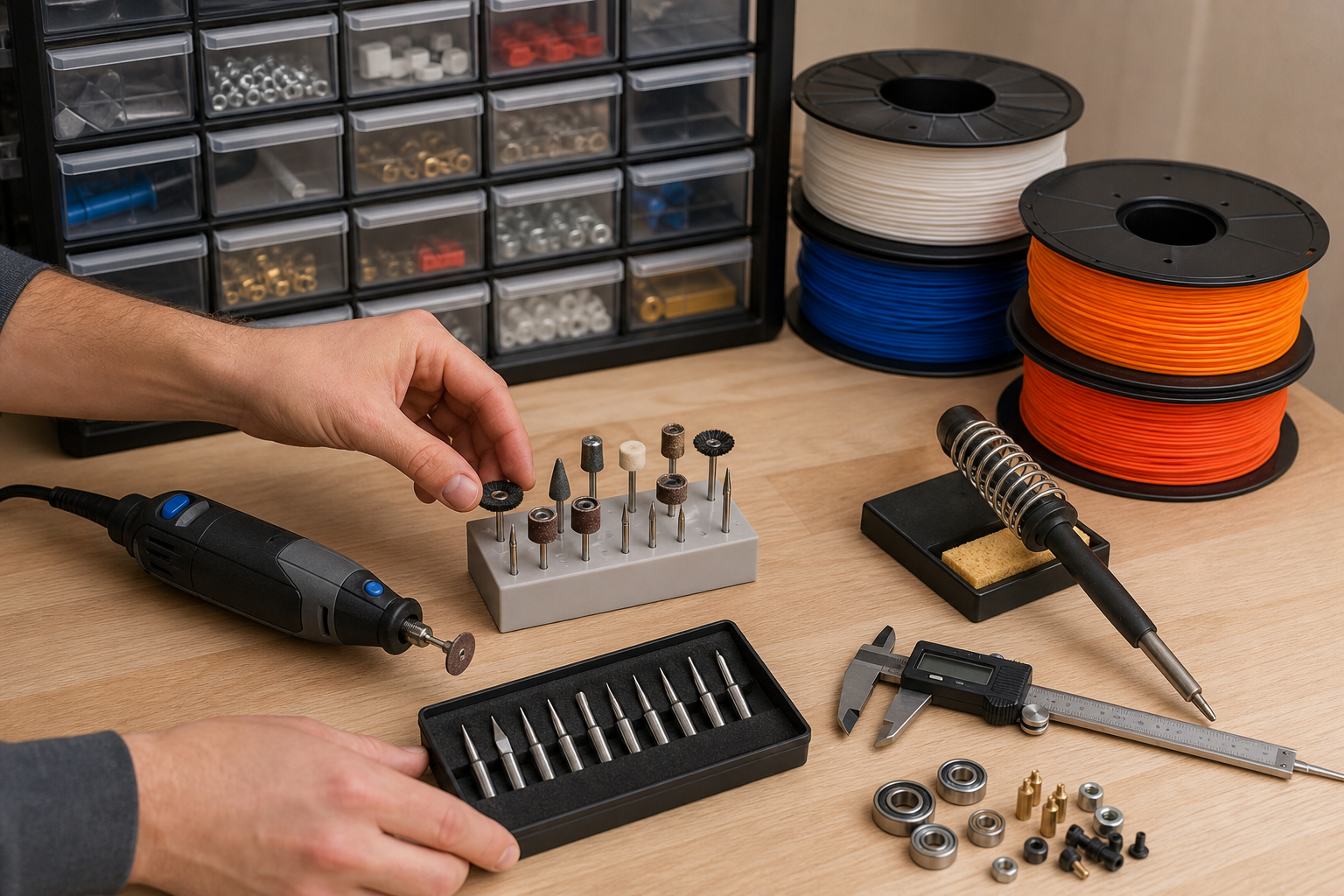
- Prefer a usable variable-speed range over maximum RPM alone.
- Match PLA, PETG, TPU, or ABS to your printer temperature range, bed surface, enclosure, and ventilation setup.
- For calipers, separate display resolution from real accuracy and consider calibration needs.
- Choose drawer, wall, or portable organizers based on the path your hands follow during a project.
Build a Balanced Maker Kit
A balanced kit spends more on durable core tools and less on oversized accessory assortments until you know what you use. Include maintenance and workshop basics such as eye protection, fume management, spare soldering tips, desiccant, labels, and small-parts bins.
- A practical starter mix is a variable-speed rotary tool, temperature-controlled soldering station, PLA or PETG, 150 mm digital caliper, and drawer or wall organizer.
- Buy bits, tips, nozzles, and filament colors in small quantities until your projects reveal the repeat purchases.
- Store filament sealed with desiccant, and check moisture signs before blaming printer settings.
- Before buying, verify voltage, plug type, replacement parts, returns, delivery, and stock with the retailer.
Frequently asked questions
What should I compare first?
A practical guide to choosing rotary tools, soldering stations, 3D printer filament, calipers, and tool organizers based on real workshop needs. Start with use frequency, dimensions, warranty, replacement parts, recent reviews, and the return policy before chasing the lowest price.
Should I check Amazon, Coupang, or AliExpress first?
Use Amazon and Coupang for fast delivery categories, then compare AliExpress for low-cost accessories, parts, and bundles.
Where should I confirm price and availability?
Prices, coupons, shipping times, and stock change often, so confirm the final details on the merchant page before buying.