Start with the work you repeat
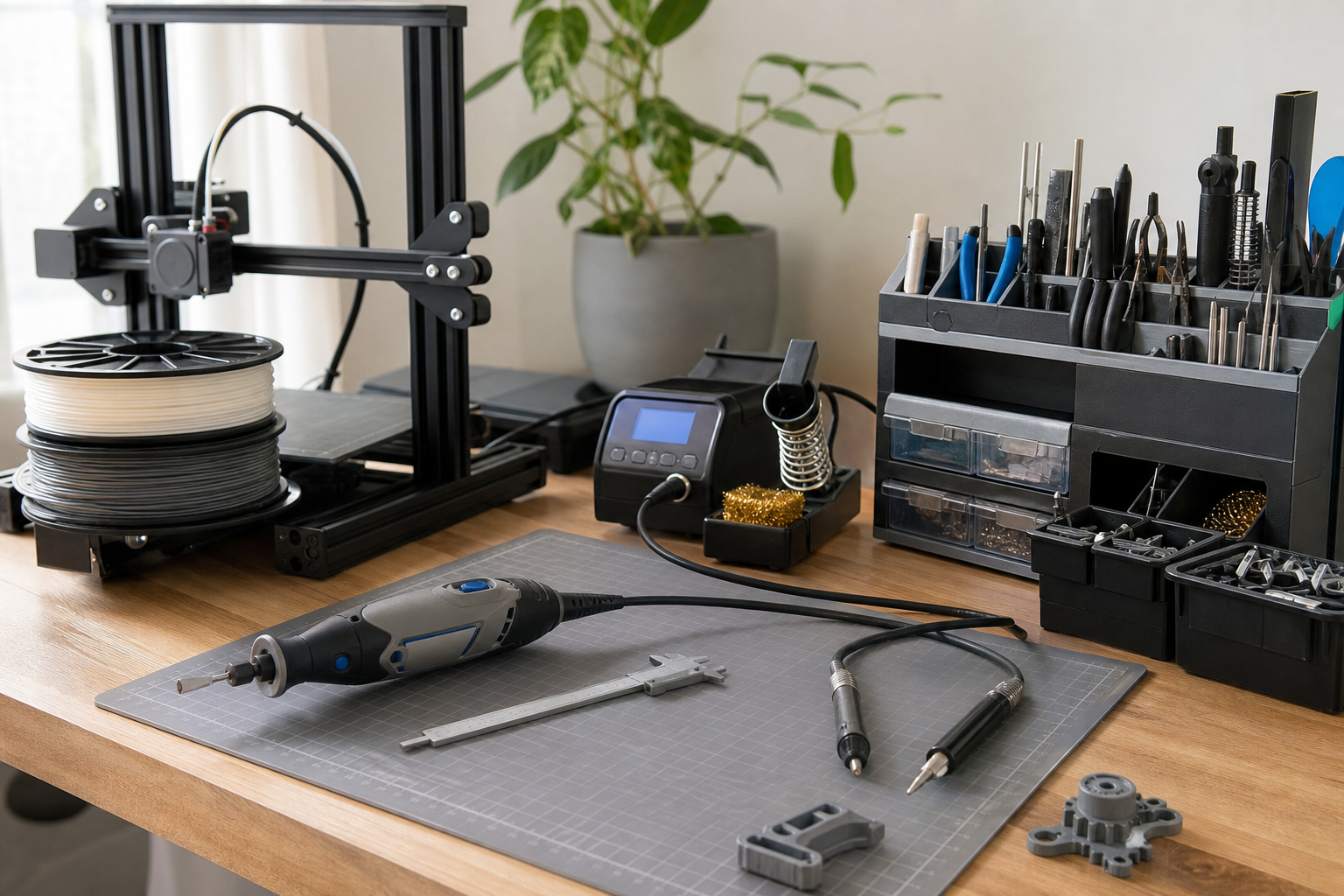
A useful maker toolbox is not a collection of the most expensive gear. It is a set of tools that makes common tasks more accurate, cleaner, and easier to repeat. Before comparing models, list the jobs you actually do: quick repairs, print cleanup, electronics assembly, measuring parts, or organizing small hardware.
- For rotary tools, compare speed control, bit compatibility, vibration, and grip comfort.
- For soldering stations, look at temperature stability, tip availability, stand design, and cord flexibility.
- For 3D printer filament, check material type, diameter tolerance, storage needs, and printer temperature range.
- For calipers, prioritize repeatable readings, easy zeroing, clear display, and battery access.
Compare practical details, not headline specs
Maximum wattage, top speed, or highest temperature can be less useful than how the tool behaves during normal work. A rotary tool should stay controllable at low speed. A soldering station should recover heat consistently. Filament should be packaged and stored in a way that reduces moisture problems.
Use stores as neutral checkpoints for price, delivery, return policy, and availability. Also compare manufacturer documentation and long-term user feedback, especially for consumables such as soldering tips, cutting bits, collets, and filament spools.
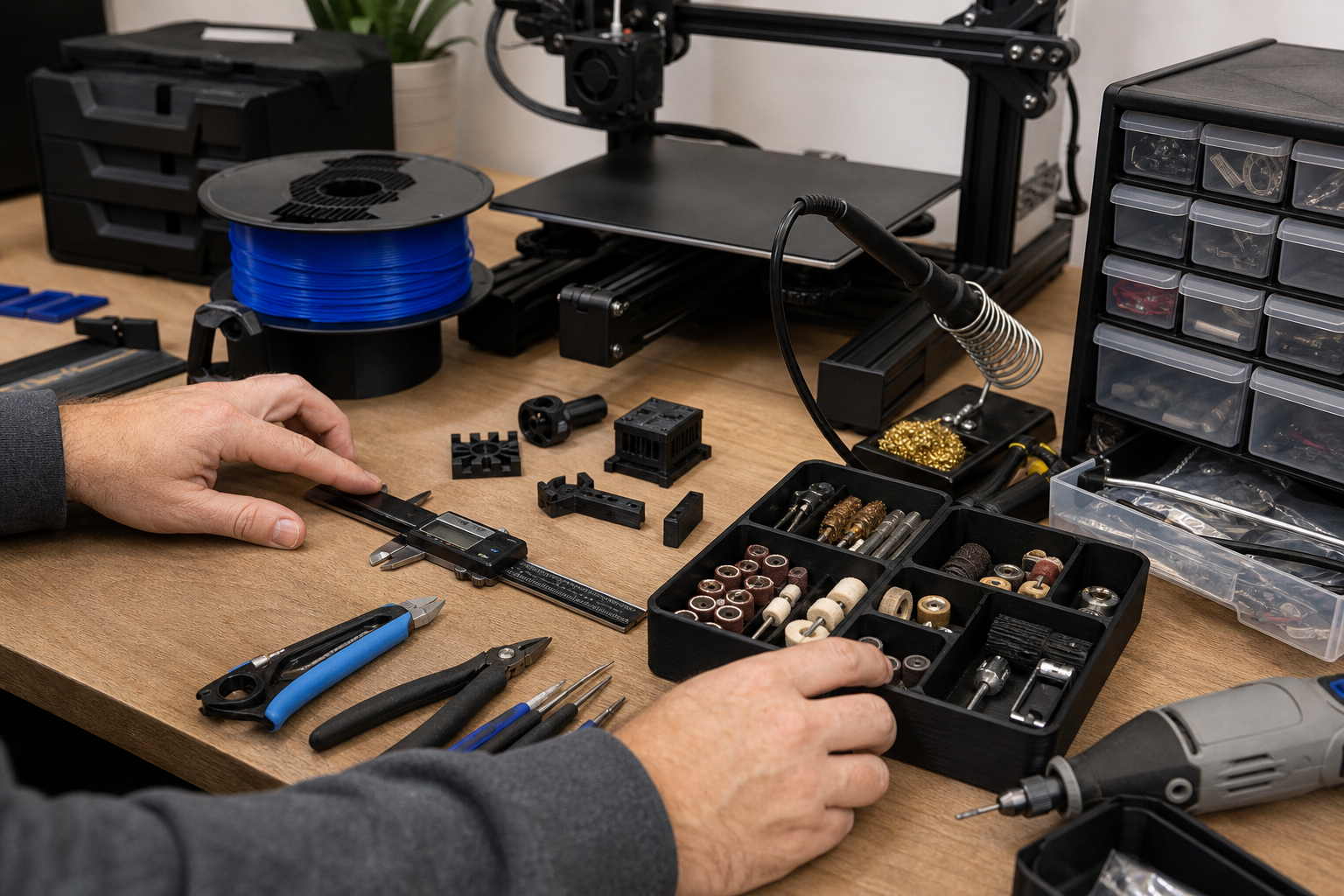
- Check whether replacement parts and consumables are easy to find.
- Match tool size, noise, and cable length to your bench space.
- Do not overvalue large accessory kits unless the included parts fit your projects.
- Choose organizers by drawer depth, adjustable dividers, visibility, and stacking stability.
Build the kit in a sensible order
If you are starting from scratch, measurement and organization tools often deliver value before specialized equipment. A reliable caliper and a clear parts organizer improve almost every build. Add a rotary tool or soldering station when your projects make their requirements obvious.
For 3D printing, buy filament by material behavior rather than color alone. PLA, PETG, ABS, and specialty blends differ in print temperature, bed adhesion, ventilation needs, finish, and post-processing, so match the spool to your printer and use case.
- Start with calipers, basic organizers, and a dependable everyday filament.
- Prioritize a temperature-controlled soldering station if electronics work is frequent.
- Choose a rotary tool with widely available bits if cutting, sanding, or cleanup is common.
- Keep manuals, spare tips, bits, and filament storage supplies together after purchase.
Frequently asked questions
What should I compare first?
A neutral guide to choosing rotary tools, soldering stations, filament, calipers, and organizers by fit, reliability, and workflow rather than hype. Start with use frequency, dimensions, warranty, replacement parts, recent reviews, and the return policy before chasing the lowest price.
Should I check Amazon, Coupang, or AliExpress first?
Use Amazon and Coupang for fast delivery categories, then compare AliExpress for low-cost accessories, parts, and bundles.
Where should I confirm price and availability?
Prices, coupons, shipping times, and stock change often, so confirm the final details on the merchant page before buying.