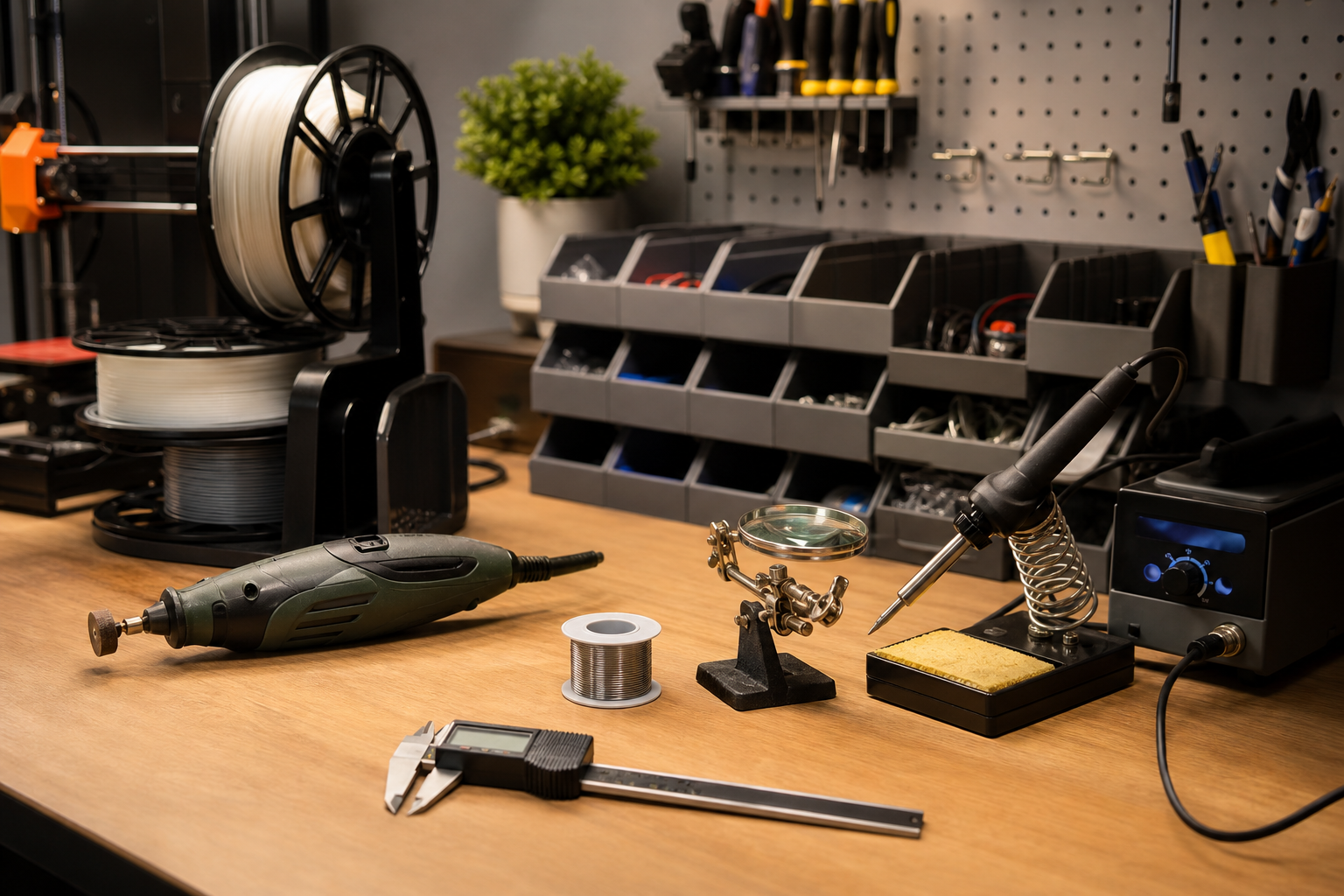
Start With The Projects You Actually Make
A useful tool purchase starts with the work you repeat, not the most powerful specification. Decide whether you mostly cut plastic, shape wood, repair electronics, tune 3D prints, or measure parts, then match the tool to that pattern.
Before buying, use stores as neutral places to verify price, delivery, return policy, and availability. Also check whether replacement tips, collets, bits, filament, batteries, and other consumables are easy to find.
- List your most common materials and tasks
- Check bench space, outlets, noise, and ventilation needs
- Compare consumable and spare-part availability
- Review warranty and return terms before ordering
Compare The Core Tools By Use Case
For rotary tools, look at variable speed control, comfort, vibration, accessory compatibility, and corded versus cordless power. Fine grinding and detail work benefit from stable low-speed control, while occasional mobile work may favor a cordless body.
For soldering stations, prioritize temperature stability, replaceable tips, stand quality, and clear controls. For 3D printer filament, match material type to your printer, storage habits, desired surface finish, and the part’s practical use.
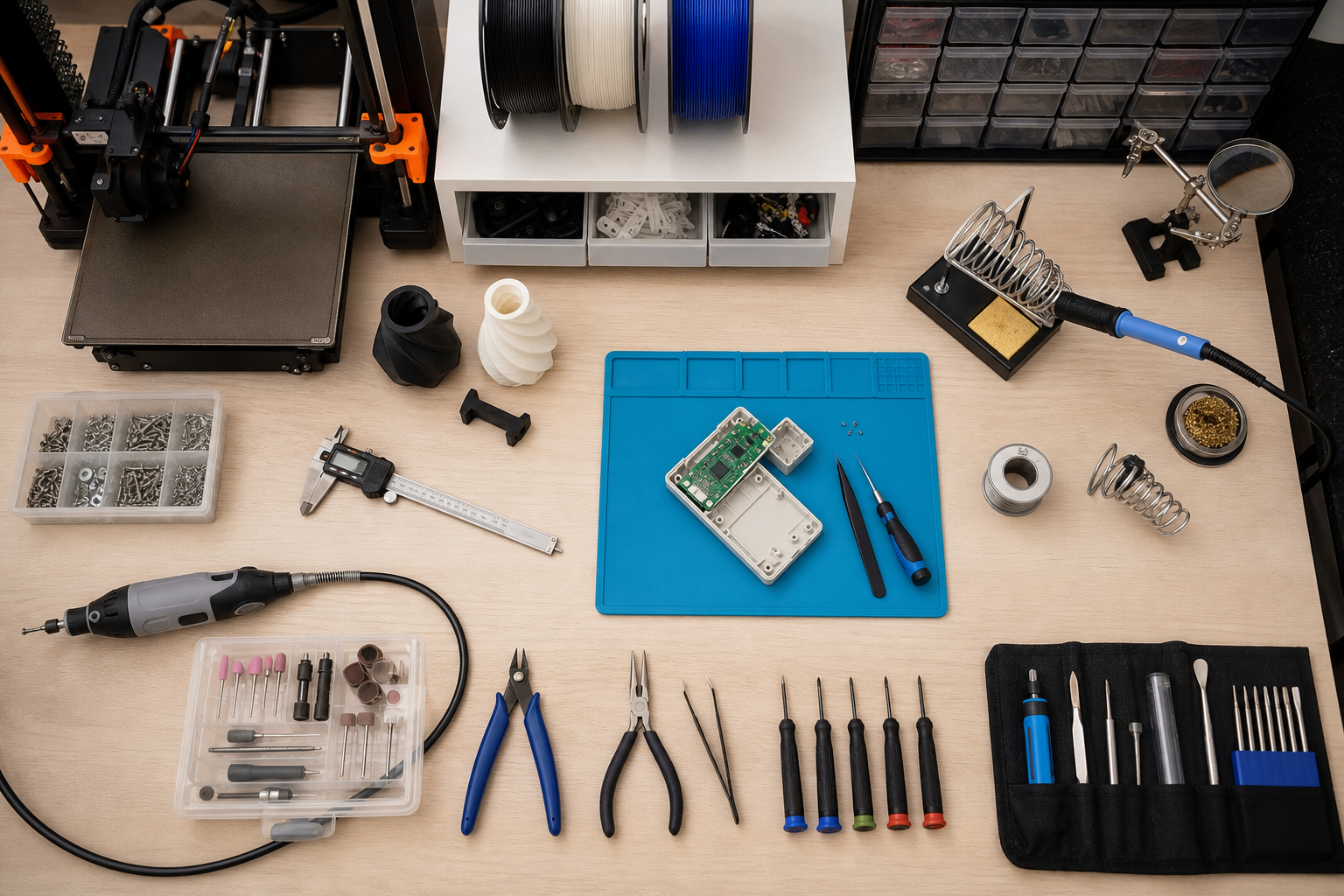
- Choose calipers with repeatable readings and easy zeroing
- Compare PLA, PETG, ABS, and specialty filaments by temperature and handling needs
- Check soldering tip shapes and replacement cost
- Buy rotary accessories around real tasks, not oversized kits
Budget For Storage And Maintenance
Tool organizers affect speed, accuracy, and lost-part frustration. Drawer units, wall panels, divided boxes, and small bins all work, but the best choice is the one that matches how you move through a project.
A realistic budget includes consumables, basic protective gear, storage, replacement parts, and maintenance items, not only the tool body. That approach helps beginners avoid overbuying and helps experienced makers fill actual gaps.
- Keep frequently used tools within easy reach
- Separate blades, tips, bits, and small hardware by type
- Store filament with moisture control when needed
- Protect measuring tools from drops, dust, and loose metal chips
Frequently asked questions
What should I compare first?
A practical guide to choosing rotary tools, soldering stations, 3D printer filament, calipers, and tool organizers by project needs, workspace, consumables, and maintenance. Start with use frequency, dimensions, warranty, replacement parts, recent reviews, and the return policy before chasing the lowest price.
Should I check Amazon, Coupang, or AliExpress first?
Use Amazon and Coupang for fast delivery categories, then compare AliExpress for low-cost accessories, parts, and bundles.
Where should I confirm price and availability?
Prices, coupons, shipping times, and stock change often, so confirm the final details on the merchant page before buying.